
Last updated November 22, 2026
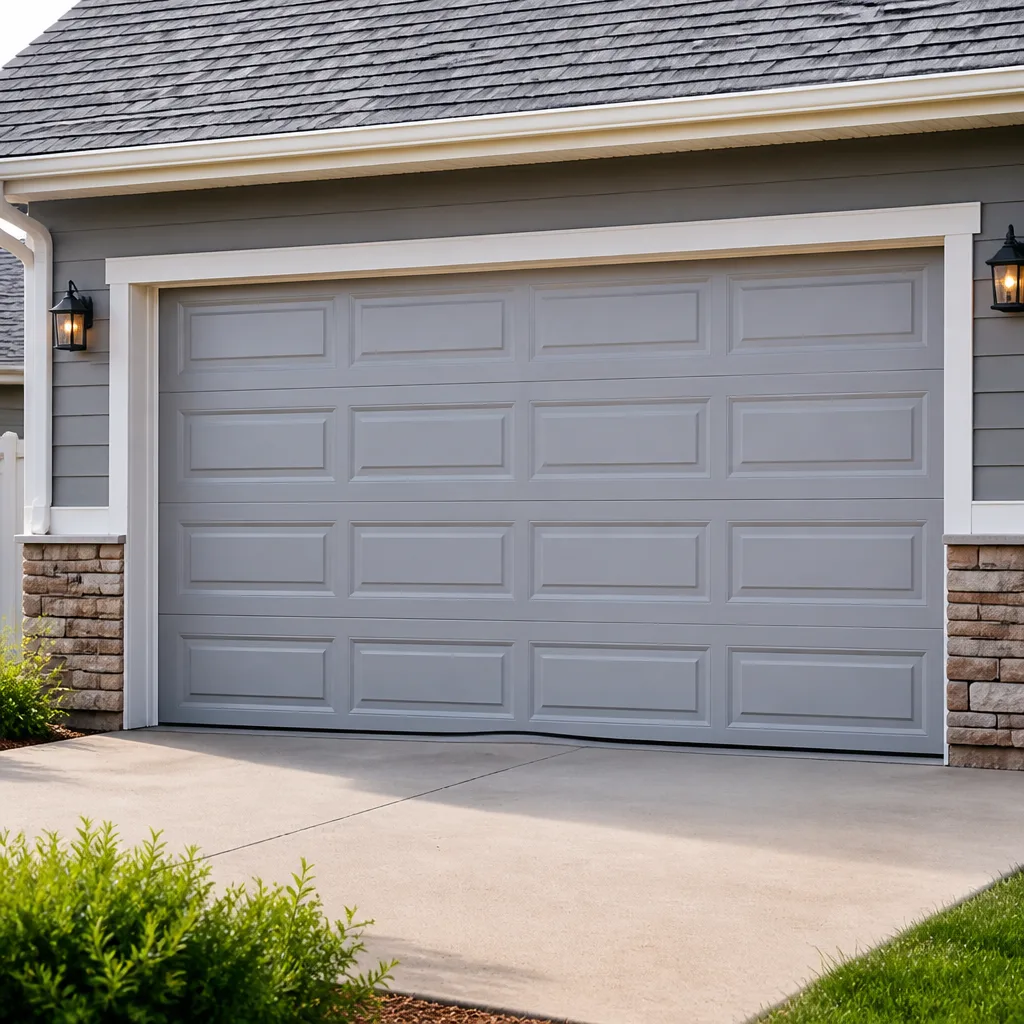 Raised-panel steel
 Carriage house
 Modern flush
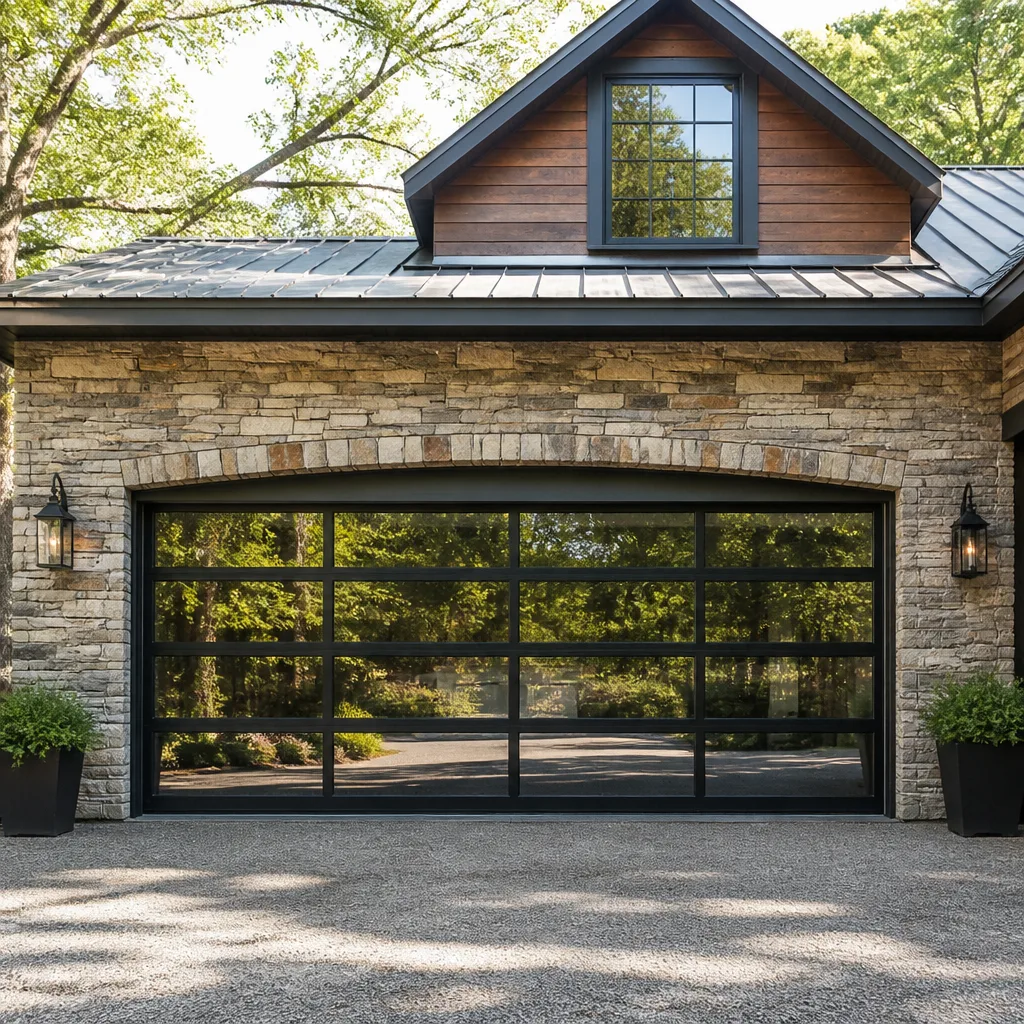 Full-view glass
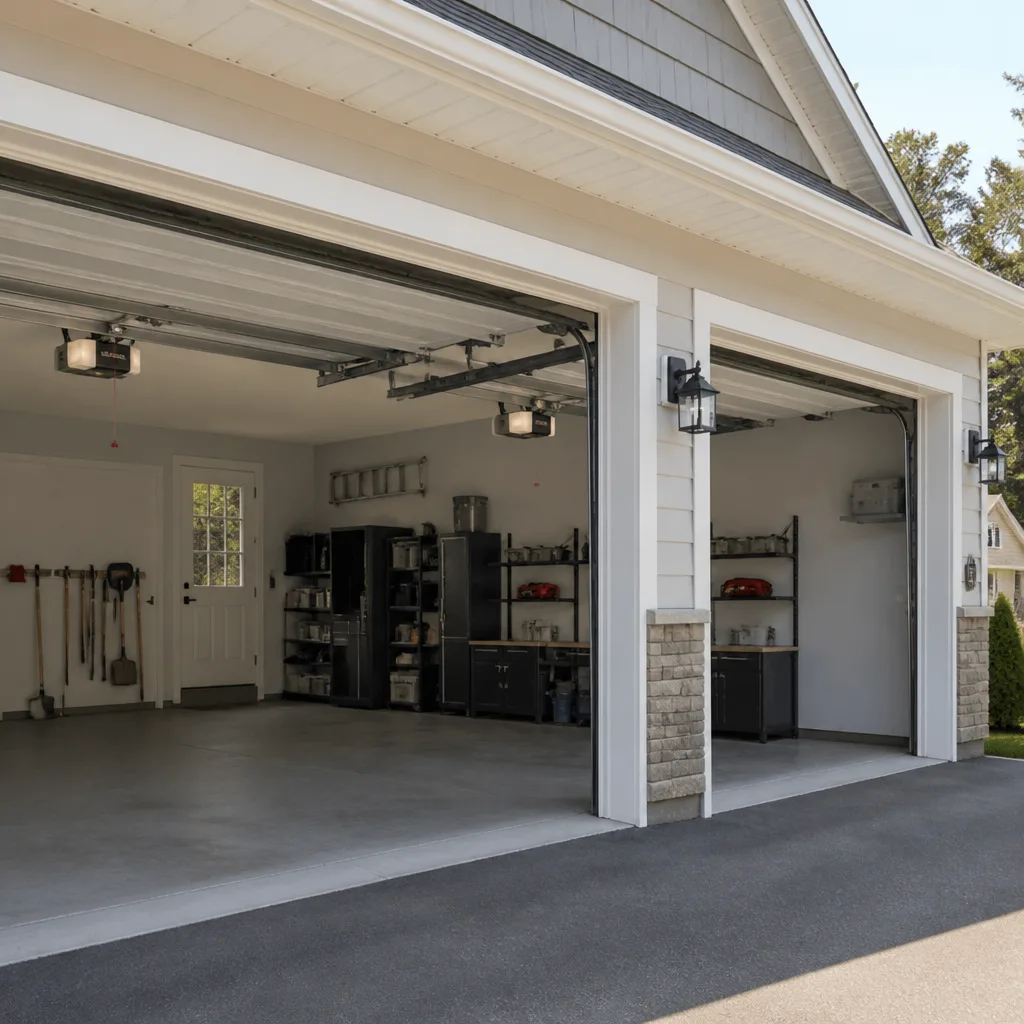 LiftMaster openers
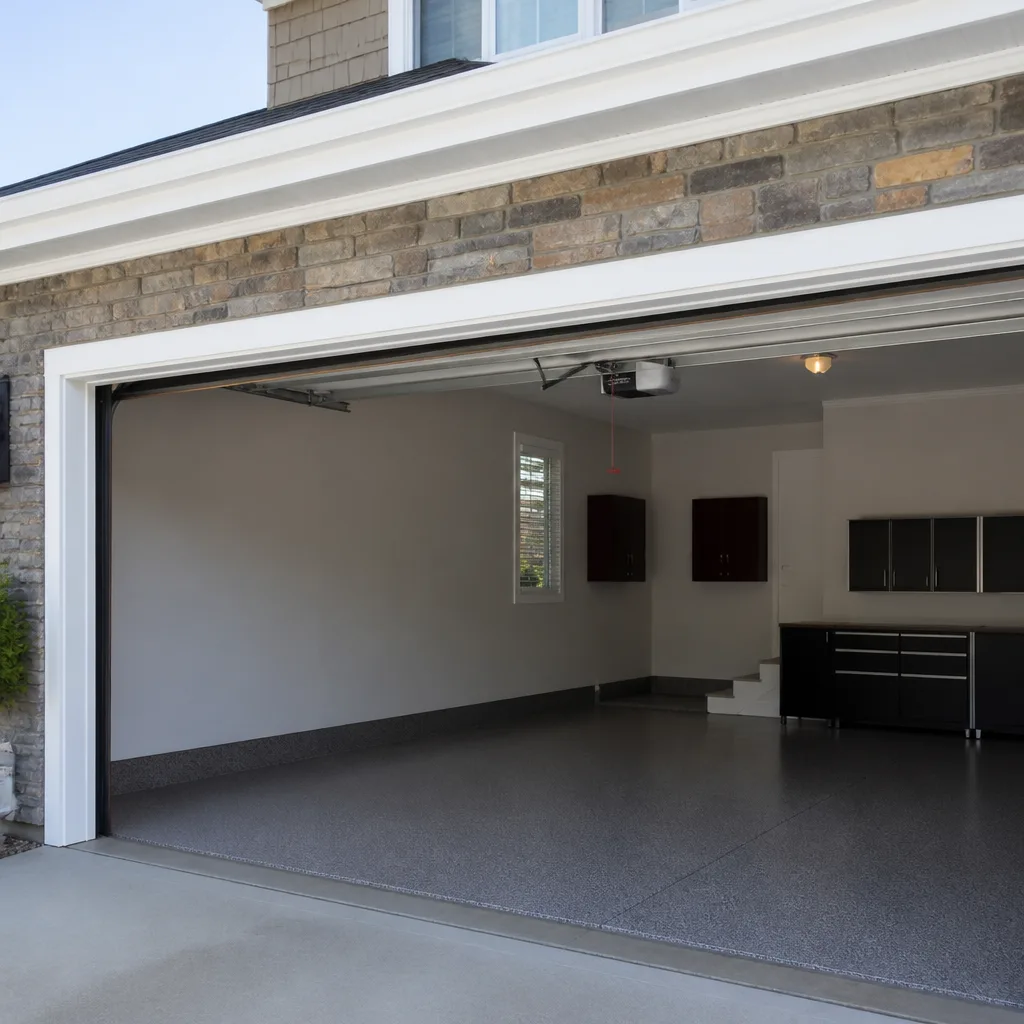 Chamberlain openers
Full 25-point door and opener safety check with every visit - springs, cables, rollers, tracks, and your LiftMaster or Chamberlain opener included
You get a price before we start. It does not change when the pro arrives.
Get your free estimateSeasonal Garage Door Care for Mentor: Year-Round Homeowner’s Guide
Lubricating your garage door springs in October feels responsible. Then February arrives, Mentor gets the sub-zero wind chills that push through Northeast Ohio, and that lubricant has stiffened or migrated off the coils. Your springs have been running dry through the highest-stress operating period of the year, and nobody noticed. Most homeowners time their garage door maintenance to the wrong seasons. They tune up in fall because that’s what every checklist says, then ignore the two windows that actually cause the most damage here: late-winter freeze-thaw and the early-summer humidity jump off Lake Erie. This guide walks you through a month-by-month calendar built around how doors really behave in Mentor, so you know when to lubricate, when to inspect, and when to call a professional.
Quick Answer
Garage door maintenance in Mentor should follow two peak-risk windows rather than the standard fall/winter/spring/summer schedule: late February through March, when repeated freeze-thaw cycles stress springs and bottom seals, and June through July, when Lake Erie humidity swells wood and wood-composite components. Lubricate in late winter and again in early summer, inspect weather seals before each window, and have springs and cables checked only by a trained technician because they’re under extreme tension.
Styles & brands we work with
- Raised-panel steel
- Carriage house
- Modern flush
- Full-view glass
- LiftMaster openers
- Chamberlain openers
Table of Contents
- Why Mentor’s Climate Breaks the Standard Maintenance Calendar
- Month-by-Month Garage Door Care Calendar for Mentor
- Why Late February Through March Is the Highest-Risk Window
- How Lake Erie Humidity Affects Wood, Composite, and Steel Doors
- Cold-Weather Opener Behavior: Lubrication vs. a Struggling Motor
- Pre-Storm Prep for Mentor Thunderstorms and Ice Storms
- What You Should Never Adjust Yourself
- Common Mistakes to Avoid
- When to Call a Professional
- Frequently Asked Questions
Why Mentor’s Climate Breaks the Standard Maintenance Calendar
Most garage door care advice is written for a generic climate. It assumes one cold season, one hot season, and smooth transitions in between. Mentor doesn’t work that way. Sitting on Lake Erie’s shore means the city swings through dozens of freeze-thaw cycles between December and March, and each one changes the loads on your door’s moving parts. A spring that sits at a steady temperature wears predictably. A spring that warms to the forties, freezes solid overnight, and thaws again by afternoon is being asked to flex against metal that’s contracting and expanding at different rates than the coils themselves.
There’s a second factor that’s easy to miss. Mentor’s summer humidity arrives fast. The lake moderates winter cold, but it also feeds moisture into the air in June and July, and that moisture finds every unpainted seam on a wood or wood-composite door. A door that felt tight in May can be swollen and binding by the first week of July.
So the usual four-season checklist fails here in two ways. It puts the heaviest inspection work in autumn, when the real strain is still months away. And it lumps all of Northeast Ohio into “winter,” ignoring that late February through March is a distinct and harder period than December or January.
When we work on Mentor Garage Door Repair Pros calls in this city, the failures we see line up with those two windows, not with the calendar most guides recommend. Doors that got a fall tune-up still show dry springs and cracked bottom seals by mid-March. Doors that ran fine all spring start rubbing and sticking by July.
Month-by-Month Garage Door Care Calendar for Mentor
A Mentor-specific calendar looks different from the seasonal buckets you’ll find elsewhere. Here’s how to lay out the year so your inspections land before the stress, not after it.
- January: Listen for new noises. Cold metal amplifies squeaks and grinding, so this is the month to note anything that sounds different. Don’t lubricate yet; wait for a thaw window.
- February, late: Lubricate hinges, rollers, and the torsion or extension springs on a mild day. Check the bottom seal for cracking. This is your most important maintenance slot of the year.
- March: Inspect after the last hard freeze. Look at cables for fraying and check that the door closes flush against the floor. Book spring inspection if you’ve heard popping or the door feels heavy.
- April: Clear the tracks of winter grit and salt residue. Wipe down steel panels and touch up any chipped paint before humidity sets in.
- May: Test the auto-reverse safety feature by placing a roll of paper towels in the door’s path. Check the balance by disconnecting the opener and lifting the door halfway; it should hold.
- June: Lubricate again for summer. Inspect wood and composite doors for swelling at the seams and bottom rail. Watch for binding as humidity climbs.
- July: Tighten hinge and bracket screws that have loosened from seasonal wood movement. Recheck the seal along the floor.
- August: Do a full visual pass: panels, springs, cables, rollers, opener chain or belt tension. Note anything for fall.
- September: Prep for storm season. Clear gutters above the garage, check the door’s seal against wind-driven rain, and confirm the opener’s force settings are correct.
- October: Light lubrication is fine, but it isn’t the year’s main event. Recheck weather seals before the first freeze.
- November: Test the opener’s cold-weather performance on the first truly cold morning. If the door moves sluggishly, address it before deep winter.
- December: Keep the tracks clear of snow and ice. Don’t force a frozen door; a stuck bottom seal can damage panels and cables.
The point of this schedule is simple. You’re doing meaningful work in late winter and early summer, and lighter inspection the rest of the year. Many Mentor homeowners put in their only real effort in October, then coast through the two windows that do the most harm.
Why Late February Through March Is the Highest-Risk Window
If we could only pick one stretch to worry about for Mentor homeowners, it’s late February through March. Springs and bottom seals fail here more than at any other time, and there are three reasons that all stack up at once.
Freeze-thaw fatigue. Springs are already working hard every time the door opens and closes. When the surrounding air swings above and below freezing day after day, the metal is cycling through temperature-driven expansion and contraction on top of the mechanical load. That combination shortens the working life of any spring.
Dry coils from stiffened lubricant. Any lubricant you applied in fall has been sitting through months of cold. Some of it has stiffened. Some has migrated off the coil entirely. Either way, the springs are running metal-on-metal during their highest-stress months.
Bottom seal breakdown. The rubber or vinyl seal along the floor takes the worst of winter. Snow, ice, and grit get forced into it every time the door closes, and by March it’s cracked, torn, or torn loose. That’s a gap that lets weather and pests in and lets heat out.
If your door has been making popping, snapping, or banging sounds in February or early March, that’s often a sign of spring trouble, and it’s worth having checked immediately rather than waiting. A trained technician can inspect springs and cables and tell you whether you’re looking at normal wear or a failing part. We handle garage door spring repair in Mentor as a standalone service, because this is the part of the system that most often fails in late winter and is also the most dangerous to handle without training.
How Lake Erie Humidity Affects Wood, Composite, and Steel Doors
The early-summer humidity spike pulls moisture out of the lake air and pushes it into every porous surface on your door. What that moisture does depends entirely on what your door is made of, and the differences matter for what you check in June and July.
Wood doors are the most sensitive. Solid wood swells at the seams, joints, and bottom rail when humidity climbs, so a door that closed smoothly in April can start binding in its tracks by early July. Watch for sticking at the top and bottom, and check whether the finish along the bottom rail and edges is holding. Bare or thin spots let moisture in directly, which is why touching up paint matters much more in late spring than most homeowners realize.
Wood-composite doors sit in the middle. They handle humidity better than solid wood, but their seams can still swell, and the bottom rail is the usual weak point. Look for bubbling, cracking, or soft spots near the floor, especially after a wet June.
Steel doors don’t absorb water the same way, but that doesn’t mean they’re immune. What humidity does to a steel door is find every chip, scratch, or fastener in the finish and start rust there. June and July are when small paint failures become visible, which is why touching up before summer humidity sets in is worth the effort.
The practical upshot for Mentor: your June and July checks should be about moisture. Look for binding, swelling, and bubbling on wood and composite doors, and chips or rust spots on steel doors. If you have a wood or composite door that’s been binding since the humidity rose, a technician can tell you whether it needs adjustment or something more.
A quick note on steel door care: a wood-look steel door from Clopay or Amarr handles humidity better than the real thing, but only if its painted finish stays intact. Any bare spot will rust. So even steel door owners should include a June finish inspection.
Cold-Weather Opener Behavior: Lubrication vs. a Struggling Motor
When your opener labors on a cold Mentor morning, there are two different problems that look the same from the driver’s seat: a lubrication issue on the door hardware, and an opener motor fighting low-temperature grease. Telling them apart matters, because one is routine maintenance and the other may mean the opener needs service.
Here’s how a technician thinks about it. A sluggish door that’s sluggish because cold has thickened the lubricant on the tracks, rollers, hinges, and springs is a door-side problem. The opener is doing its job; the door is pushing back. A motor that strains or hums without moving the door, on the other hand, points to something inside the opener.
You can often tell the difference by disconnecting the door from the opener and lifting it by hand. Roughly, if the door is easy to move when disconnected, the opener is struggling with a stiff door, not a failing motor. If the door itself is hard to lift, the door hardware is the problem. If the door moves easily by hand but the opener still struggles, the opener is the likely culprit.
Cold-weather greases can also thicken inside the opener itself during a deep freeze, causing the opener to strain on the first cold morning. That’s often temporary, but if the opener labors on every cold morning all winter, you’re looking at normal wear, not just cold stiffening. We work on garage door opener repair across the major brands, including LiftMaster and Chamberlain units with smart-home features as well as older traditional models, and diagnosing whether the door or the opener is at fault is usually the first step.
Our technicians have up to 9 years of experience with these systems. The opener is sometimes the problem, but plenty of “my opener is failing” calls end with a lubrication and balance fix on the door itself. That’s why an honest diagnosis before a replacement recommendation matters.
Pre-Storm Prep for Mentor Thunderstorms and Ice Storms
Mentor gets both summer thunderstorms and winter ice storms, and each type of storm stresses a garage door differently. Prepping for both is a matter of doing a few smart checks before the weather arrives and leaving the risky parts alone.
For summer thunderstorms, the concern is wind and water. Check that the door closes flush and the weather seal is in good shape before the season peaks. If your area has a history of wind-driven rain reaching the garage, that bottom seal is what keeps the water out. Also check the opener’s force and travel limits so the door isn’t straining against a seal that’s too tight. Don’t try to reinforce a door’s panels or add weight; doors are engineered for what they’re rated for, and modifying them can damage the balance and the springs.
For winter ice storms, the concern is the bottom seal freezing to the floor. Before a predicted ice event, make sure the bottom seal is in good condition; a cracked seal is more likely to freeze to the concrete. If your door does freeze shut, don’t force it. A forced door can snap a spring or tear a cable. Break the ice loose by hand around the bottom edge before you run the opener.
One thing to leave alone in both cases: the springs and cables. They’re under extreme tension, and nothing storm-related is worth risking your hands on them. If a storm has stressed your door and something sounds wrong afterward, call for garage door repair rather than trying to adjust anything yourself.
What You Should Never Adjust Yourself
Some garage door maintenance is safe for a homeowner. Lubricating rollers, cleaning tracks, tightening a loose screw on a bracket, and wiping down panels all fall into that category. A short list of parts does not.
- Torsion springs and extension springs. These store enough energy to cause serious injury if they release unexpectedly. Spring replacement is a job for a trained technician, every time.
- Cables. Cables hold the door’s weight and run under very high tension. Never cut, adjust, or handle them yourself.
- Track adjustment. Tracks must be perfectly aligned and plumb. A misaligned track can drop the door; this is a technician’s call.
- The opener’s force and travel settings. If these are set wrong, the door can fail to reverse on an obstruction. Adjusting them requires a proper balance test, not trial and error.
- Balance adjustment. If the door won’t hold halfway open, the balance is off. That’s a spring and hardware issue, and it needs a technician.
When in doubt, treat the whole door as a system that a qualified technician should inspect rather than something to troubleshoot piece by piece. We’d rather you call with a question than try to fix a spring yourself.
Common Mistakes to Avoid
- Lubricating only in October. Fall lubrication feels right because that’s what the generic checklists say, but by February that lubricant has stiffened or migrated, leaving springs dry during Mentor’s highest-stress months. Lubricate in late winter and again in early summer.
- Using grease on the tracks or springs. Heavy grease attracts grit and dust, which turns into an abrasive paste. Use a proper lubricant rated for garage door springs and rollers, applied lightly.
- Skipping the bottom seal check. The bottom seal is the first thing to fail in a Mentor freeze-thaw cycle, and it’s easy to overlook because you don’t see it from outside. Check it in March and again before storm season.
- Forcing a frozen door open. A door frozen to the floor can snap a spring or cable when forced. Break the ice loose by hand first, and if the door still won’t move, call a technician.
- Ignoring new noises in January. Cold metal amplifies new sounds, and a squeak that shows up in January is often a spring telling you it needs attention. Note it and have it checked.
- Treating wood-composite doors like steel. Composite doors swell and can absorb moisture at their seams. If you check a steel door’s finish, also check a composite door’s seams in June and July.
- Assuming “my opener is failing” means a new opener. A stiff door is one of the most common causes of a struggling opener. Get an honest diagnosis before replacing anything.
When to Call a Professional
Call a professional for any garage door issue that involves springs, cables, or a door that’s out of balance. Call immediately if you’ve heard a loud pop and the door won’t open, if the door is stuck partway, or if the door is closing unevenly. These are the scenarios where a trained technician’s inspection saves you from injury, and where waiting can turn a repair into a replacement. We can work with your insurer on major damage, and we answer calls with free estimates. Mentor Garage Door Repair Pros offers free estimates in Mentor, call (833) 923-2167. We answer 24/7.
Frequently Asked Questions
Lubricate in late February, on a mild day, and again in early June before summer humidity arrives. Those two windows line up with Mentor’s peak-risk periods, while a fall lubrication alone leaves the springs dry during February’s freeze-thaw stress and misses the humidity stress that builds in June.
Signs of failing springs include a door that feels heavy when you lift it by hand, popping or snapping sounds from the springs, a door that won’t stay halfway open, and a gap between the door and the floor when closed. If you notice any of these, don’t try to inspect the springs yourself. Call (833) 923-2167; estimates are free and our technicians can check for you.
The door is the more common culprit. Disconnect the door from the opener and lift it by hand; if the door is easy to move, the opener is struggling with a stiff door, and if the door is hard to lift, the door hardware needs attention. If the door moves easily but the opener still struggles, the opener is the likely issue. Call (833) 923-2167 for an exact diagnosis.
Wait for the weather to pass for anything that involves the springs, cables, or opener settings, and never work on a door during an active thunderstorm. Pre-storm prep, like checking the bottom seal and closing the door fully, is the safe way to handle storms; save the repairs for dry weather.
Lake Erie humidity swells wood and composite materials at their seams, causing sticking and binding. Check the door in June and July for swelling, bubbling, or a gap between the door and the floor. If it’s binding, call (833) 923-2167 for a free estimate before the problem gets worse.
Yes, we work on LiftMaster, Chamberlain, Genie, Clopay, Amarr, Wayne Dalton, Craftsman, and Raynor equipment. If your door or opener is one of these, we can diagnose and repair it. Call (833) 923-2167 to book a free estimate with our technicians, who have up to 9 years of experience.
See the difference
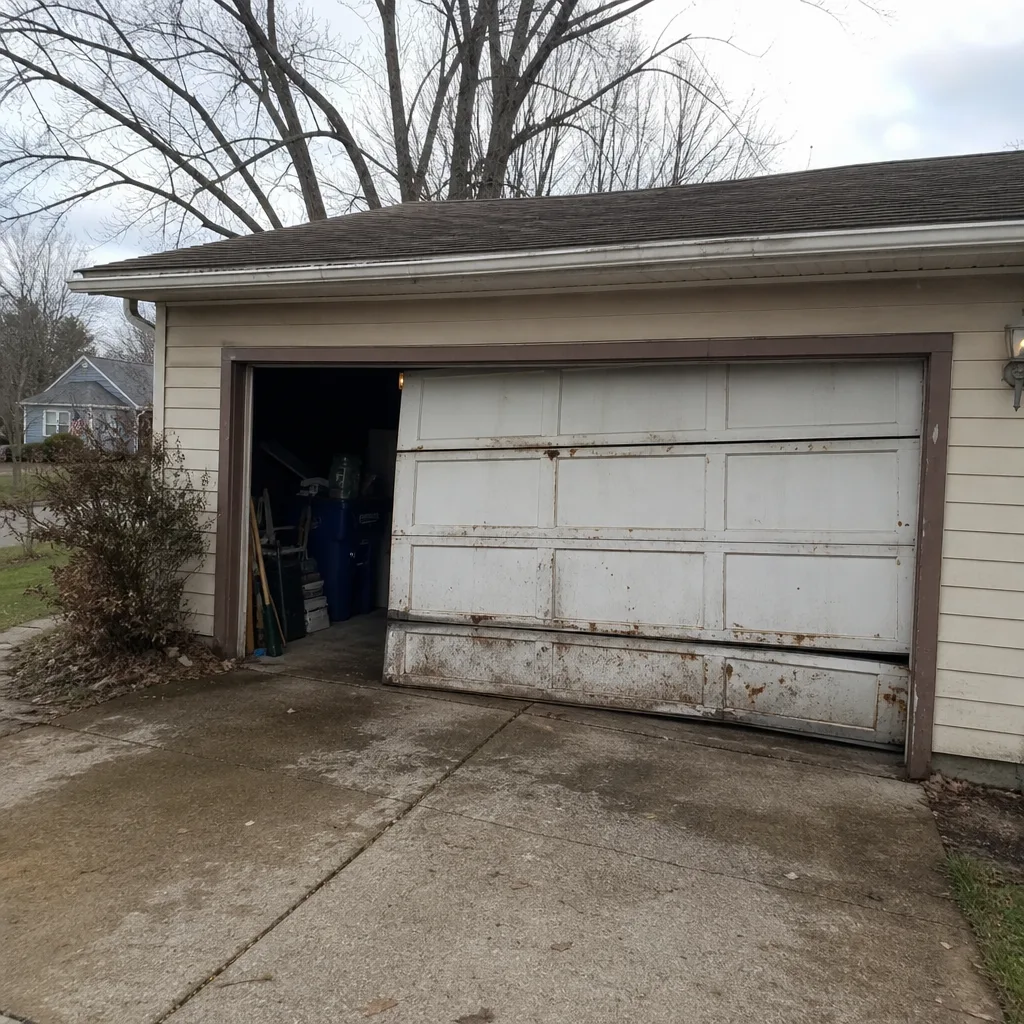 Before
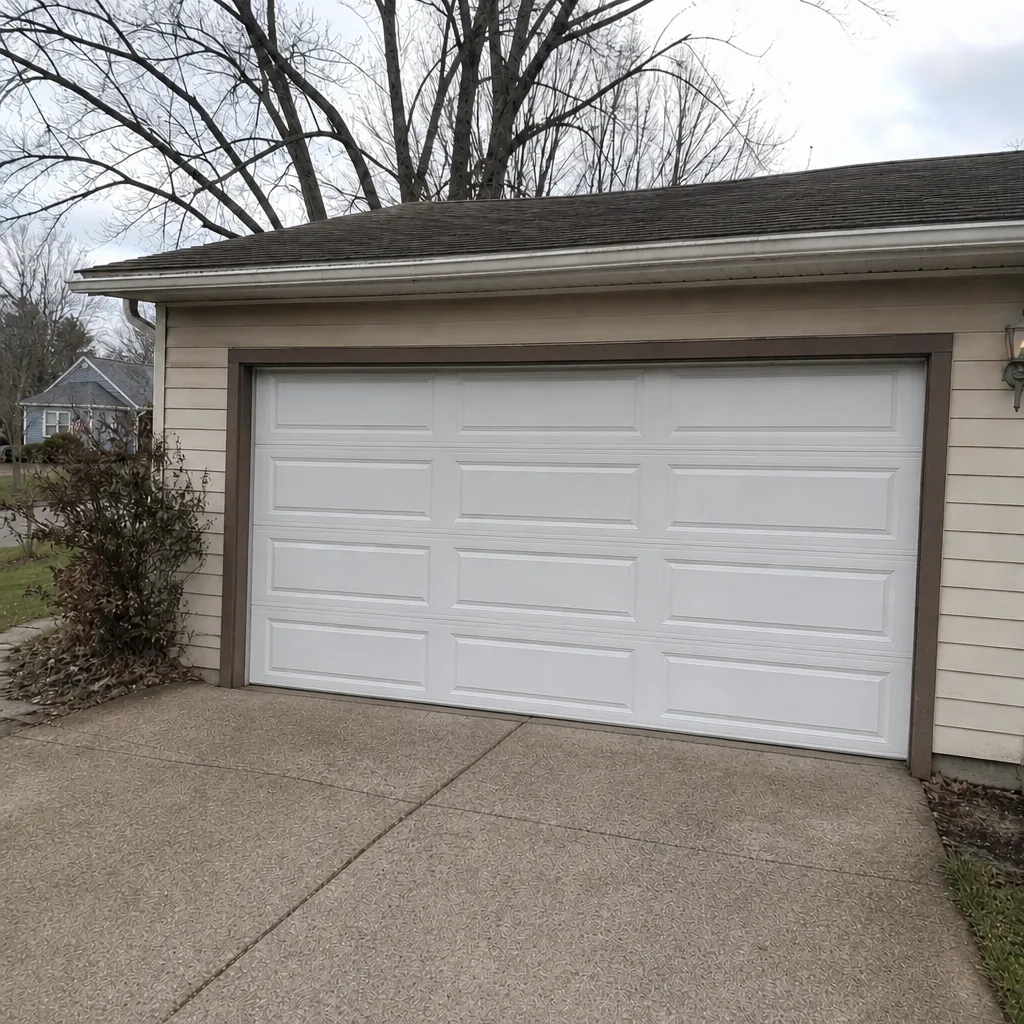 After
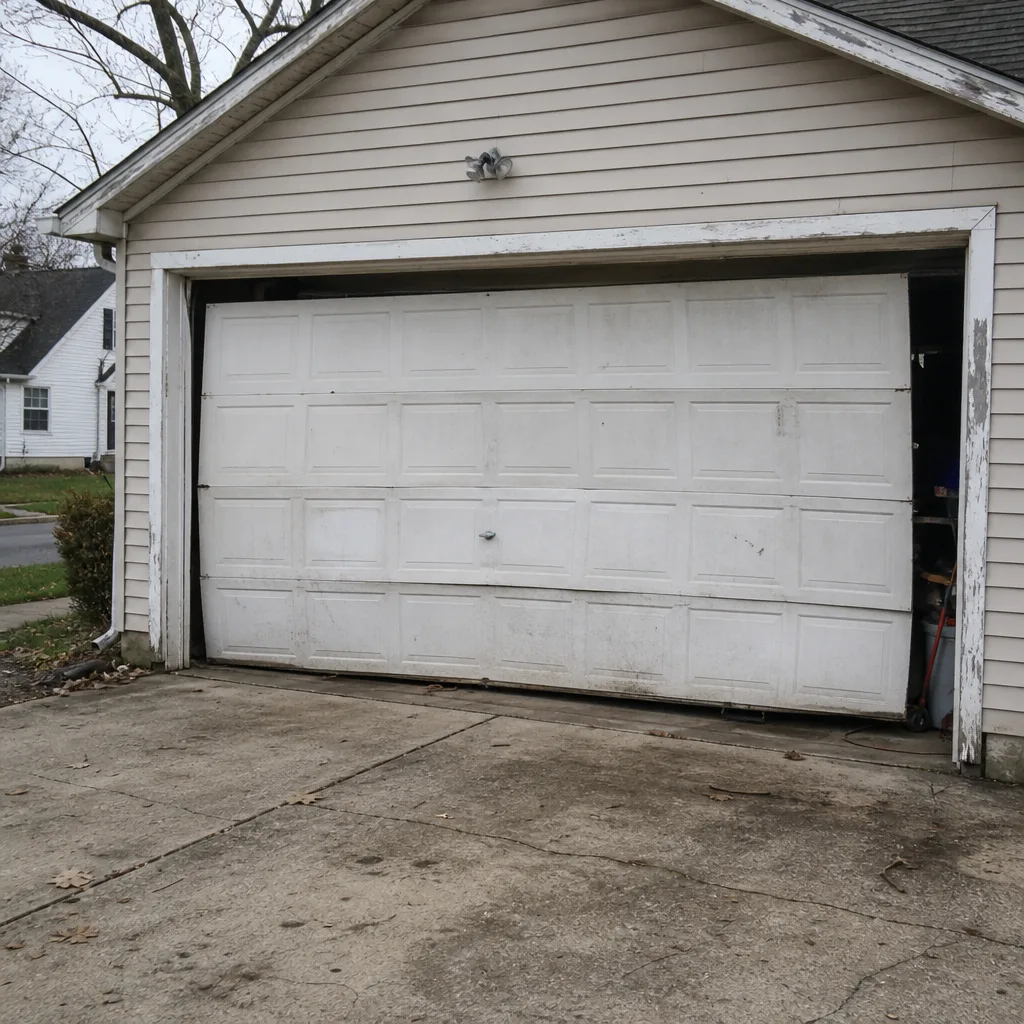 Before
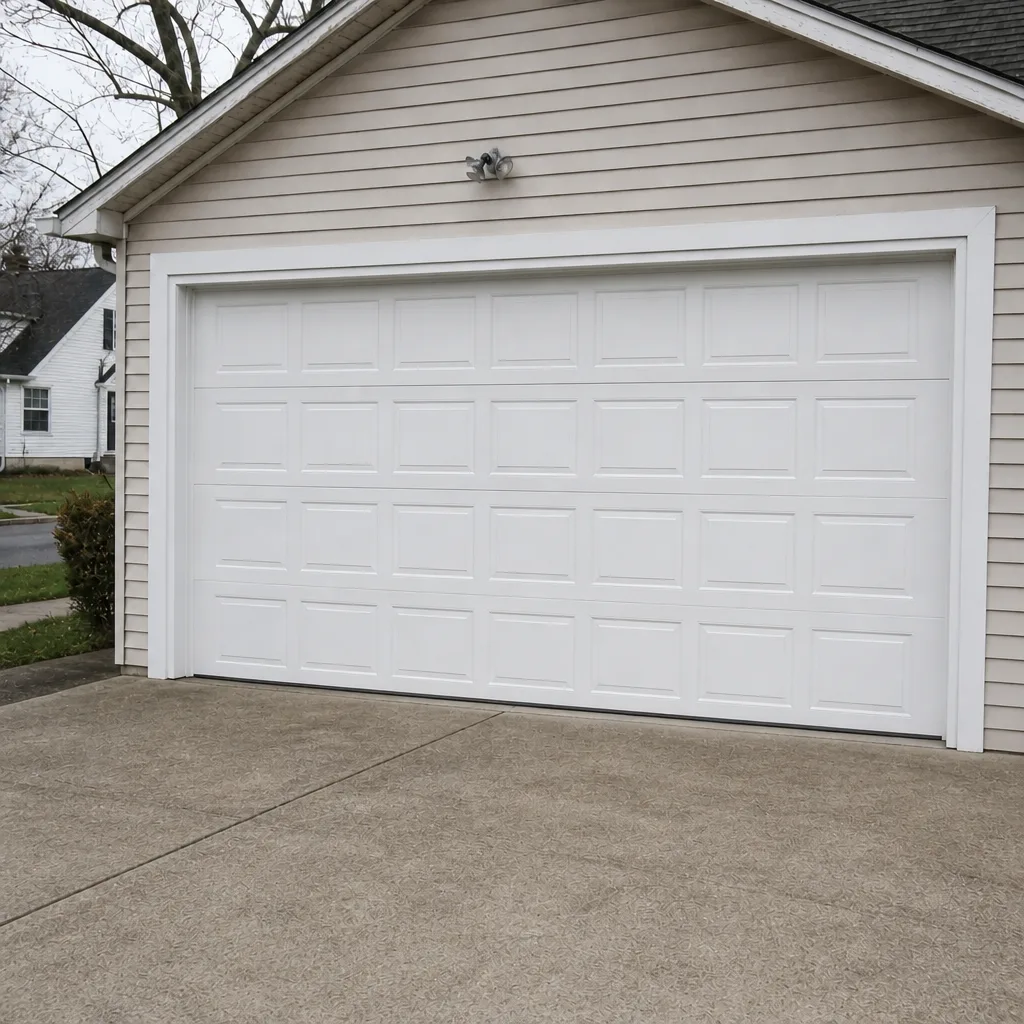 After
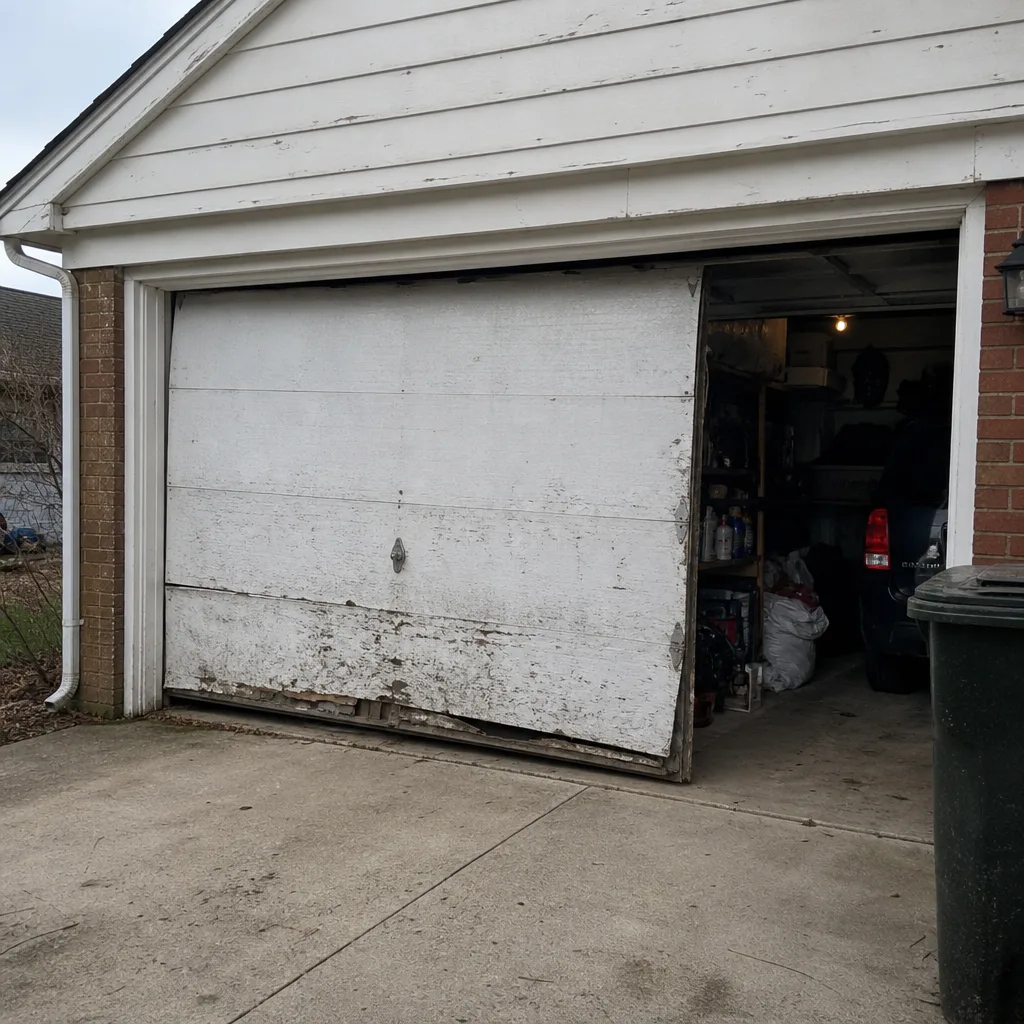 Before
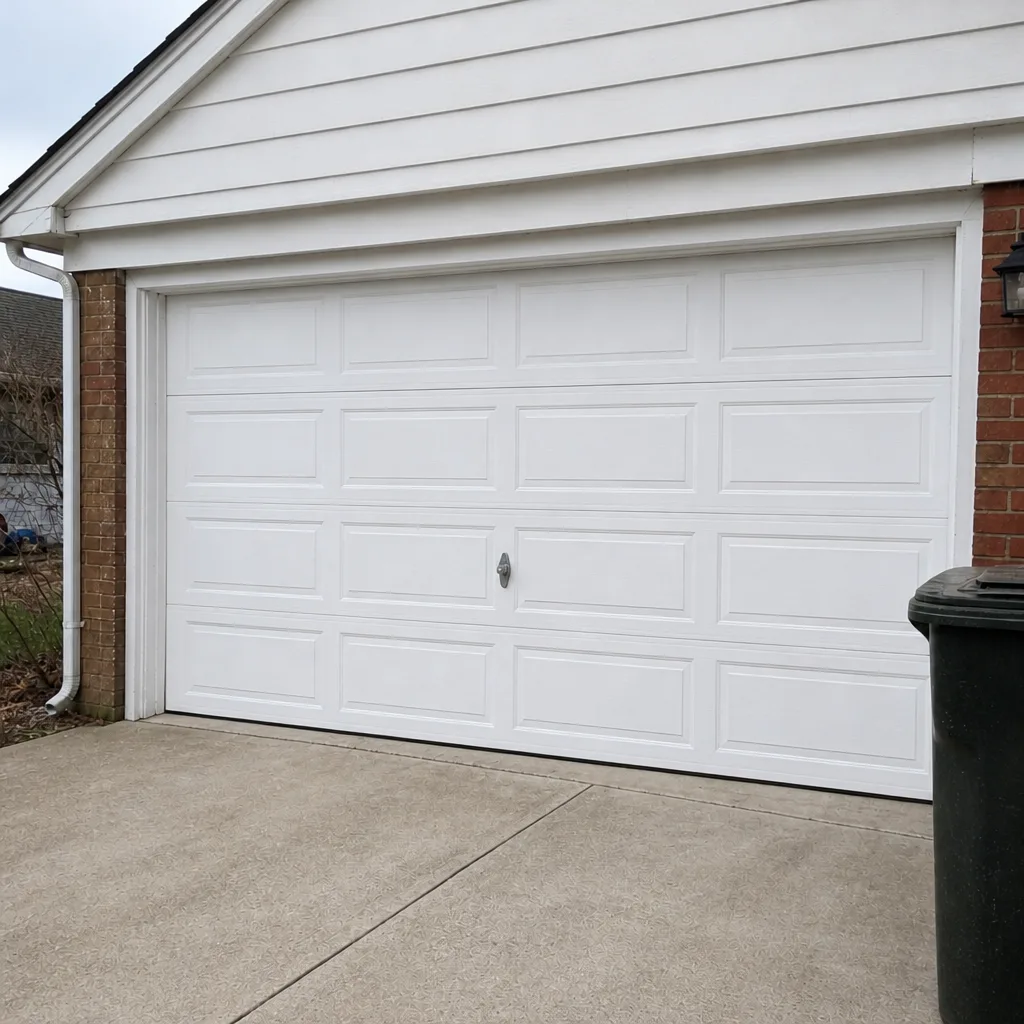 After
The Bottom Line
Mentor’s garage doors don’t break on the standard fall/winter/spring schedule. They break in late February through March, when freeze-thaw cycles stress springs and bottom seals, and in June through July, when Lake Erie humidity swells wood and composite doors and rusts steel doors. Lubricate in late winter and early summer, check your seals before each peak window, and never touch springs or cables yourself. If something sounds wrong, call (833) 923-2167. We answer 24/7, with fast dispatch from 7am to 7pm and free estimates.
Contact
Ready for a seasonal check-up or a repair? Call Mentor Garage Door Repair Pros at (833) 923-2167 for a free estimate. We answer 24/7. Fast dispatch from 7am to 7pm, Sunday through Friday. Our technicians have up to 9 years of experience and work on LiftMaster, Chamberlain, Genie, Clopay, Amarr, Wayne Dalton, Craftsman, and Raynor equipment.
Written by the team at Mentor Garage Door Repair Pros.