
Last updated November 22, 2026
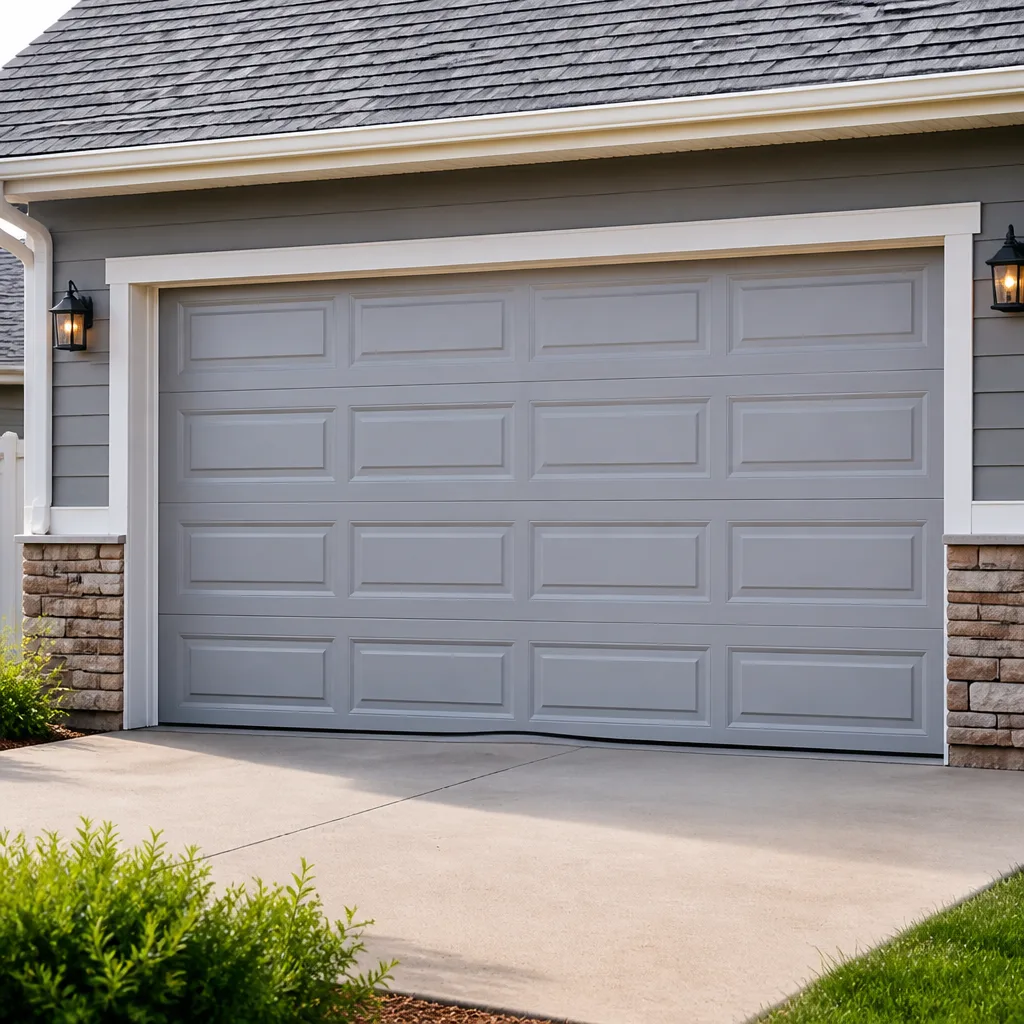 Raised-panel steel
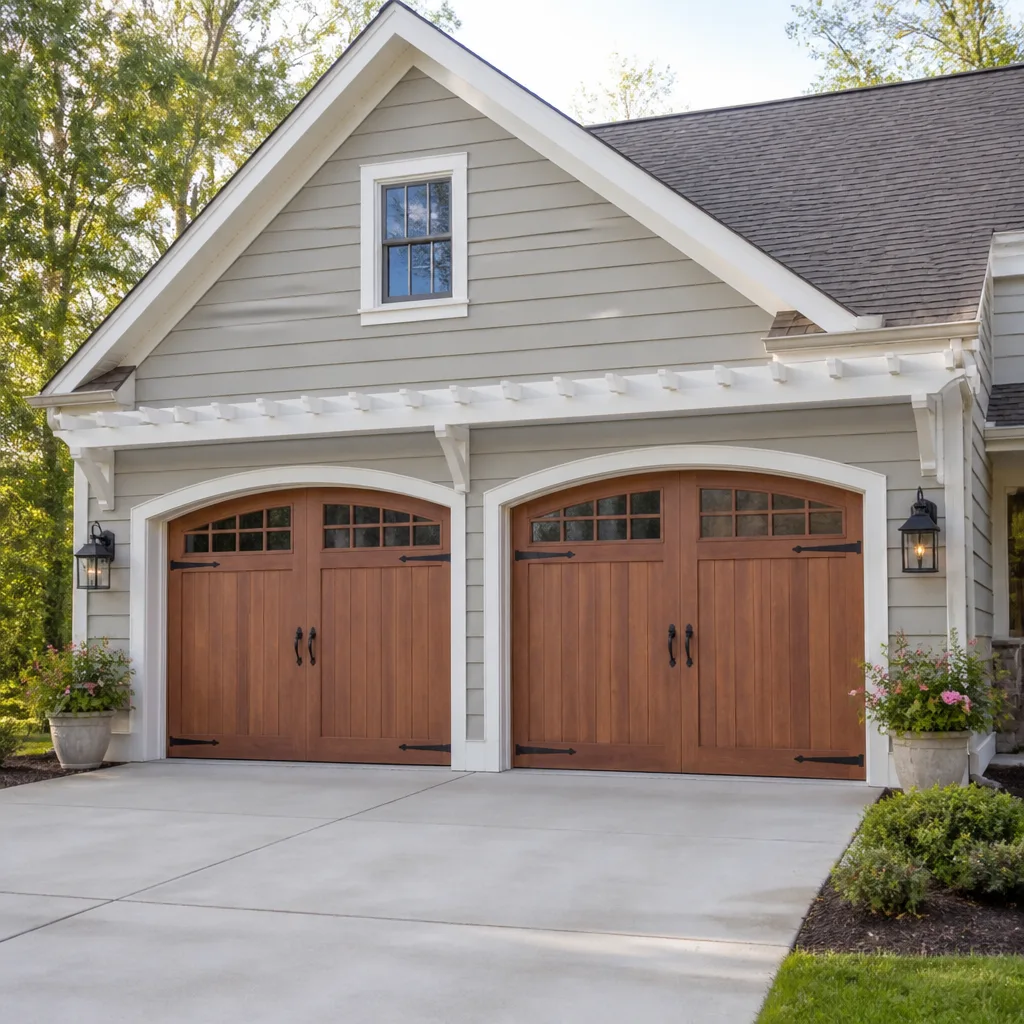 Carriage house
 Modern flush
 Full-view glass
 LiftMaster openers
 Chamberlain openers
Full 25-point door and opener safety check with every visit - springs, cables, rollers, tracks, and your LiftMaster or Chamberlain opener included
You get a price before we start. It does not change when the pro arrives.
Get your free estimateHow to Hire a Garage Door Contractor in Mentor: A Step-by-Step Guide
Here’s the part most homeowners get wrong: the contractor who causes you the most trouble usually has a license, a professional-looking estimate, and a good story. Ohio doesn’t require a specialty license specifically for garage door installation, which means any general contractor with a handyman license can legally touch your spring system, and many do without the torque knowledge to do it safely. The hire that hurts isn’t always the obvious scammer. It’s the one who quotes low, walks your door, and steers you toward a full replacement you didn’t need. This guide walks you through what Ohio actually requires, the questions to ask before anyone touches your door, how to read a garage door estimate line by line, and what a real parts-and-labor warranty looks like. If you’re hiring a garage door contractor in Mentor, this is the filter to run.
Quick Answer
To hire a garage door contractor in Mentor, verify what Ohio licenses (a general contractor) versus what it doesn’t (a garage door specialty), ask about brand-specific experience and spring certification before they look at your door, request a written line-item estimate with the price agreed before work starts, and confirm the warranty on both parts and labor in writing. Walk away from any contractor who quotes a full replacement on the first visit without testing your door’s balance and hardware.
Styles & brands we work with
- Raised-panel steel
- Carriage house
- Modern flush
- Full-view glass
- LiftMaster openers
- Chamberlain openers
Table of Contents
- What Ohio Actually Requires vs. What Most Homeowners Assume
- The Questions to Ask Before They Ever Look at Your Door
- How to Read a Garage Door Estimate Line by Line
- Why a First-Visit Replacement Pitch Should Worry You
- Spring Work Is Not General Handyman Work
- What a Legitimate Warranty Looks Like (and the Fine Print to Watch)
- How a Mentor Door Ages Differently
- Why Brand Experience Beats a Generalist Every Time
What Ohio Actually Requires vs. What Most Homeowners Assume
Ohio does not issue a garage door specialty license. What the state does require is that a general contractor carrying a home improvement project of $25,000 or more be licensed, and local jurisdictions layer their own registration on top. For a spring replacement or a single opener swap, the dollar threshold usually isn’t the issue, but the point stands: there is no state test that confirms your garage door tech actually knows spring torque. Plenty of Mentor homeowners assume a “licensed” tech is a garage door specialist. Sometimes that’s true. Plenty of times, it isn’t.
What should you actually verify before you hire? A few things, in this order:
- General liability insurance. Ask for the certificate of insurance and verify it covers residential work. A fly-by-night operation without it can leave you holding the bill if something gets damaged.
- Workers’ comp or exemption. If a helper gets hurt on your property and there’s no coverage, the liability question can land on you. Ask for proof.
- Local registration. The City of Mentor and surrounding Lake County communities have their own contractor registration requirements. Ask whether they hold current local registration for the work you need.
- Brand-specific training. This is where garage door specialists separate from generalists. A tech trained on LiftMaster openers and Chamberlain wall-mount units knows the travel limits, force sensitivity and safety-reversal logic by heart. A handyman is guessing.
None of this replaces brand experience. A general contractor who can pull a permit for your deck isn’t the person you want torquing a torsion spring in Mentor. The license tells you they can be on your property. It doesn’t tell you they know what they’re doing when they get there.
The Questions to Ask Before They Ever Look at Your Door
The call script for a garage door hire in Mentor should start before the contractor’s truck shows up. Here are the questions that separate a real garage door specialist from a generalist with a toolbox, and why each one matters:
- “What brands do you regularly work on?” You want a specific, multi-brand answer that includes the manufacturers actually installed in Ohio homes: LiftMaster, Chamberlain, Craftsman, Clopay, Amarr, Wayne Dalton, Raynor, and Genie. A contractor who names only one brand is probably a dealer pushing that product. A contractor who names all eight, or close to it, has seen what your neighbors actually have.
- “How many spring replacements have you done this year?” Spring work is the most common garage door repair and also the most dangerous. The answer tells you whether springs are routine for them or a rare, nerve-wracking job.
- “Do you carry spring insertion tools and winding bars?” A proper spring tech shows up with the right equipment. If they don’t, they’re not properly set up for the job.
- “Can you give me a written estimate before any work starts?” The right answer is yes, and the estimate is free. Any hesitation here is your cue to call someone else.
- “What’s your warranty on parts? On labor?” Spring manufacturers publish their own warranties. Ask which one applies to your springs and what it covers.
- “Do you charge a trip or diagnostic fee?” Free estimates are the norm for garage door contractors in Mentor. A free estimate is your baseline.
- “Can you handle the full door if repairs don’t make sense?” A contractor who handles only repairs will lean toward repairs. A contractor who also does full installation, opener replacement, and panel swaps can give you an honest repair-or-replace recommendation without having to redirect you.
Ask these on the phone, before you book. Fifteen minutes of screening saves you from the worst hire of the year.
How to Read a Garage Door Estimate Line by Line
A garage door estimate should show you the springs or opener or panels on one line, the labor on another, and the disposal fee (if there is one) on a third. Anything else is a yellow flag. Read the estimate like this:
- Parts line. Should name the actual part: brand, model number, or the specification (spring wire gauge, inside diameter, length). “Torsion spring” alone doesn’t tell you what you’re buying. “Two-spring replacement, matched pair, 0.243 in. wire, 2 in. inside diameter” does.
- Labor line. Should be a clear dollar figure or an hourly rate with the estimated hours. Vague “labor and materials bundled” lines are where markup hides.
- Disposal and haul-away. Fine to charge. A small line item is normal. A big one is worth questioning.
- Opener programming. If your opener’s remote and wall controls aren’t reprogrammed after a motor swap, you’ll be stuck resetting them yourself. Ask whether programming is included.
- Safety-reversal test. A real garage door tech will run this test before leaving. Confirm it’s part of the job.
- Warranty terms. Written on the estimate, not verbal. “Parts carry a manufacturer warranty, labor carries X” should be right there.
The line items that hide markup are almost always bundled. If you see “complete spring system replacement, installed: $XXX” without breaking out parts and labor, ask for the breakdown. A contractor who won’t break it out is either not sure of the numbers or not interested in you knowing them. Request a written estimate with everything itemized, and confirm the price is agreed in writing before any work starts. That’s your protection against the invoice surprise.
Why a First-Visit Replacement Pitch Should Worry You
Here’s a scenario that plays out in Mentor more than it should. A tech arrives for a “spring repair,” spends ten minutes with the door, and recommends a full replacement. The diagnosis is never tested. The balance isn’t checked. The hinges and rollers are never touched. The estimate for a new door is quoted, and the spring repair is suddenly “not worth doing.”
A legitimate contractor will do the opposite. Before recommending replacement, they’ll test:
- Door balance. With the opener disconnected, a properly balanced door stays put at the halfway point. If it drifts, the springs are wrong or worn, and new springs may solve the whole problem.
- Hardware condition. Rollers, hinges, cables, and the bottom bracket. If these are functional, the door has more life in it.
- Panel damage. A dent or two on the bottom section doesn’t mean the whole door needs replacing. Panels are replaceable on many models.
- Opener health. Sometimes the “door problem” is an opener problem. A Chamberlain or LiftMaster unit past its service life may just need replacement, not the door itself.
When is replacement actually the right call? When the door is genuinely unsafe, when the frame is failing, when the panel damage exceeds the door’s value, or when the door is so old the parts can’t be sourced. Those are real reasons. They’re just not first-visit reasons unless the underlying issue was actually tested. If a contractor won’t put a wrench to your door before quoting a full replacement, get a second opinion.
Spring Work Is Not General Handyman Work
Torsion springs store a lot of energy. When one lets go, it lets go hard. That’s why we treat spring work as a separate service with its own safety protocol, not something to squeeze in between drywall patches. If a general contractor offers to handle your spring repair for a flat fee, ask what their process is. If the answer involves a ladder and no winding bars, end the call.
Here’s what proper garage door spring repair involves, at a high level:
- The door comes down and the opener is disconnected.
- The springs are unwound with the right tools and the tension is confirmed at zero.
- The old springs are measured against the new ones (wire gauge, inside diameter, length) to match the load.
- New springs are wound to the manufacturer’s recommended number of turns.
- The door is tested, adjusted, and the safety-reversal function is verified.
Most spring jobs are matched-pair jobs, meaning both springs get replaced together. If a contractor quotes you a single-spring price and then upgrades you at the door, that’s the aggressive low-quote pattern this guide is trying to save you from. When the door won’t move and you need this handled quickly, we move fast, but not carelessly. Our technicians have up to 9 years of experience, and spring work is where those years matter most.
We don’t recommend garage door spring service as a DIY project. The stored energy in a wound torsion spring is enough to cause serious injury in a fraction of a second, and the tools needed to wind one safely aren’t in most garages. Leave it to a trained professional.
What a Legitimate Warranty Looks Like (and the Fine Print to Watch)
A real garage door warranty covers two distinct things: the parts and the labor. If a contractor only talks about one, ask about the other. Spring manufacturers publish warranties on their springs that typically run by cycle count, not by years, and the cycle count is what you want to confirm in writing. A 10,000-cycle spring will last roughly twice as long as a 5,000-cycle spring under normal use, and the price difference is small. Ask which cycle rating you’re buying.
What to look for in the fine print:
- Prorated vs. full replacement. Some warranties prorate the part cost over the term, meaning a claim in year three gets you a fraction of the part back. Full replacement in the covered window is cleaner.
- Labor exclusions. Many manufacturer warranties cover parts only. That means the second time the part fails, you pay labor again. Get the labor warranty in writing, separately.
- “Normal wear” clauses. Springs do wear. Never promising anything more specific than what’s in the written terms.
- Transferability. Some warranties transfer to the next homeowner; some don’t. If you’re planning to sell within a few years, ask.
None of this should require legal review. A one-page warranty that clearly states what’s covered, for how long, and what voids it is standard. If yours is more complicated than that, ask for a simpler version.
How a Mentor Door Ages Differently
Mentor sits on the Lake Erie plain, and that comes with real seasonal swings: humid summers, hard freezes in January, and a spring thaw that expands and contracts every joint on your door. That matters for what fails and when. Wood door panels absorb moisture in the summer and dry out in the winter, and painted steel doors get pitted and cracked at their lowest seams over time. Rollers wear faster when they’re cycling through temperature extremes. Even your opener’s lubrication gets stretched thin by the cold.
The seasonal reality has a few practical effects for hiring:
- Spring replacement often comes in fall or spring. Cold weather stresses springs, and a rusted steel spring can snap on the coldest morning of the year. A spring rated for your climate cycle is worth the slight premium over a cheaper one.
- Rollers need attention at least annually. Nylon rollers hold up better than steel in Ohio humidity. Ask what the tech is installing.
- Weatherstrip and bottom seals take a beating. A seal that fails lets in cold air and moisture. A real garage door contractor will notice it and point it out without a hard sell.
- Opener lubrication matters. A quick grease of the chain or belt in the fall keeps a LiftMaster or Chamberlain running when the temperature drops.
None of this is a reason to replace your door. Most of it is a reason to book routine service in Mentor and let a knowledgeable eye assess wear before it becomes a snapped spring in February.
Why Brand Experience Beats a Generalist Every Time
Your garage door isn’t a generic product. A Clopay carriage-house door and an Amarr steel raised-panel door have different track geometry, different spring specs, and different recommended torques. A Wayne Dalton iDrive opener and a Craftsman belt-drive opener have different force sensitivity logic. A Raynor door from the ’90s may use a hinge type nobody stocks anymore. A tech who works across all of these walks in knowing what they’re looking at. A generalist walks in guessing.
Why does that matter at hire time? Because when a generalist doesn’t recognize a symptom, they’re more likely to default to “you need a new door.” Not out of malice, necessarily, but because they don’t have another answer. A specialist has seen the same symptom fifty times and knows it’s a $40 roller, not a $2,800 door.
We work on 8 of the most widely installed garage door and opener brands in residential homes: LiftMaster, Chamberlain, Genie, Clopay, Amarr, Wayne Dalton, Craftsman, and Raynor. That means we can diagnose your system by what it actually is, not by what we happen to sell. If your door needs garage door repair, we’ll quote the repair. If it’s genuinely past saving, we’ll tell you that too, and we can handle the full install so you’re not calling a second company. If your opener’s playing up, whether it’s a smart-home LiftMaster or a legacy Craftsman, that’s garage door opener repair we handle directly.
You don’t have to take our word for the brand list. Ask each contractor you screen which brands they work on regularly and compare answers. The contractor whose list overlaps with the brand in your garage is the one worth booking.
Common Mistakes to Avoid
- Hiring on price alone. A quote that’s $200 under every other quote usually means the parts are cheaper, the labor is shorter, or the job is going to grow after they’ve got the door apart. Compare the line items, not just the total.
- Accepting a verbal estimate. In Mentor’s market, verbal ballparks are common because they’re easy. Written estimates with itemized parts and labor are the standard you should insist on, especially for spring work where the parts matter.
- Not asking about the warranty before the work starts. Once the door’s back together and the tech’s gone, your leverage is limited. Ask for the written warranty while the estimate is still open.
- Skipping the insurance check. It’s a boring step. It’s also the only thing standing between you and a bill if a tech gets hurt on your property or drops a door. Ask for the certificate, take a photo of it.
- Assuming “licensed” means “garage door specialist.” Ohio doesn’t issue a garage door specialty license, so a general contractor with a handyman classification can legally offer the work. That’s worth knowing when you’re comparing credentials.
- Letting the replacement pitch go untested. A contractor who quotes a new door on the first visit without checking balance, rollers, and cables is either guessing or pushing. Require a diagnosis before you decide.
- Forgetting the opener. Spring repair is often paired with an opener that’s on its last leg. A contractor who only handles springs will miss it. One who handles opener repair and install (LiftMaster, Chamberlain, Genie, Craftsman) will flag it before it strands you.
See the difference
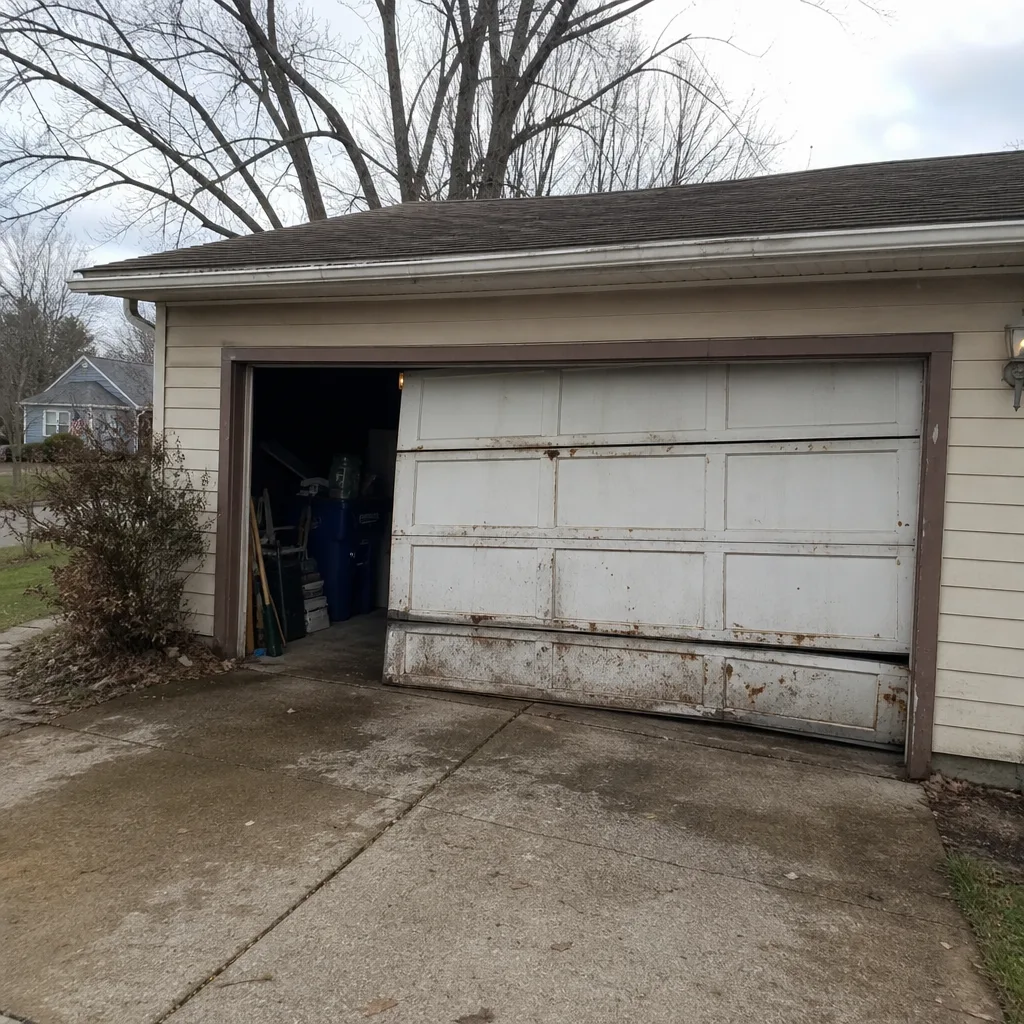 Before
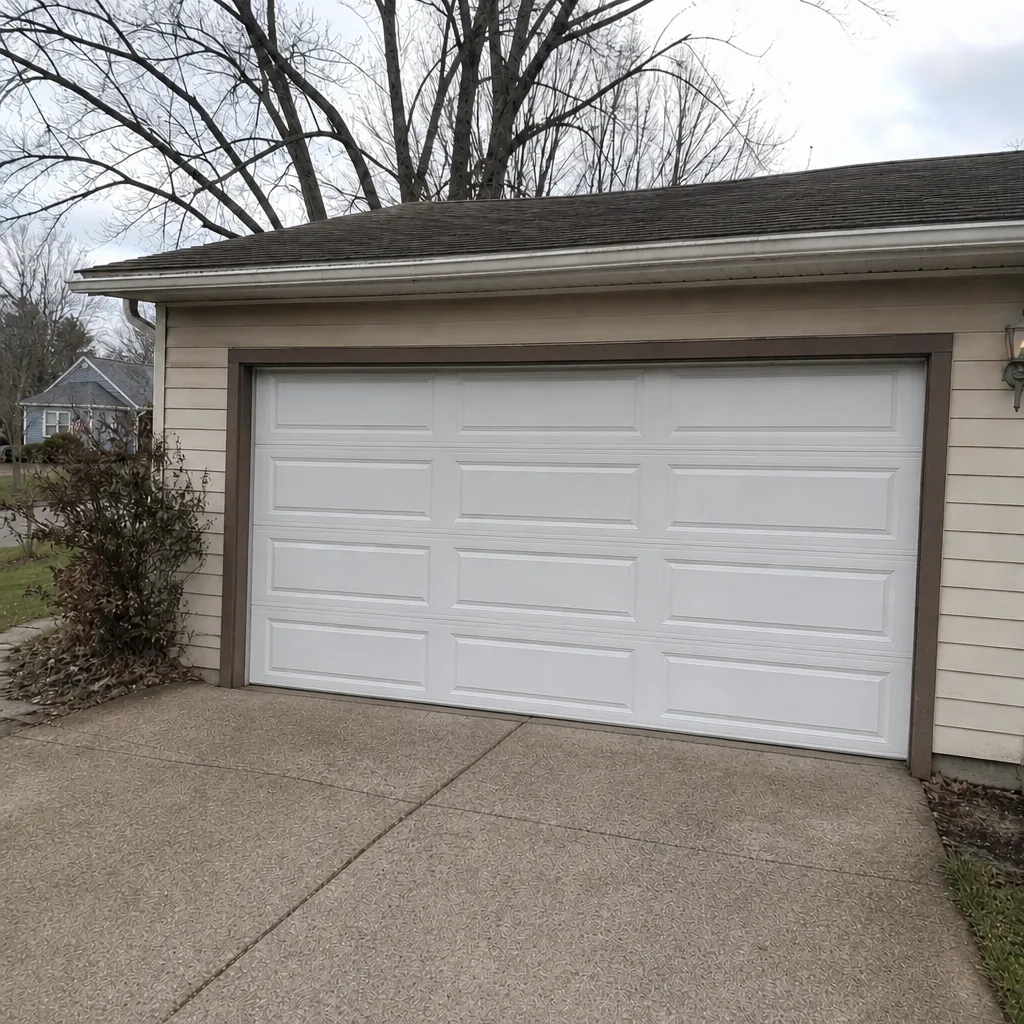 After
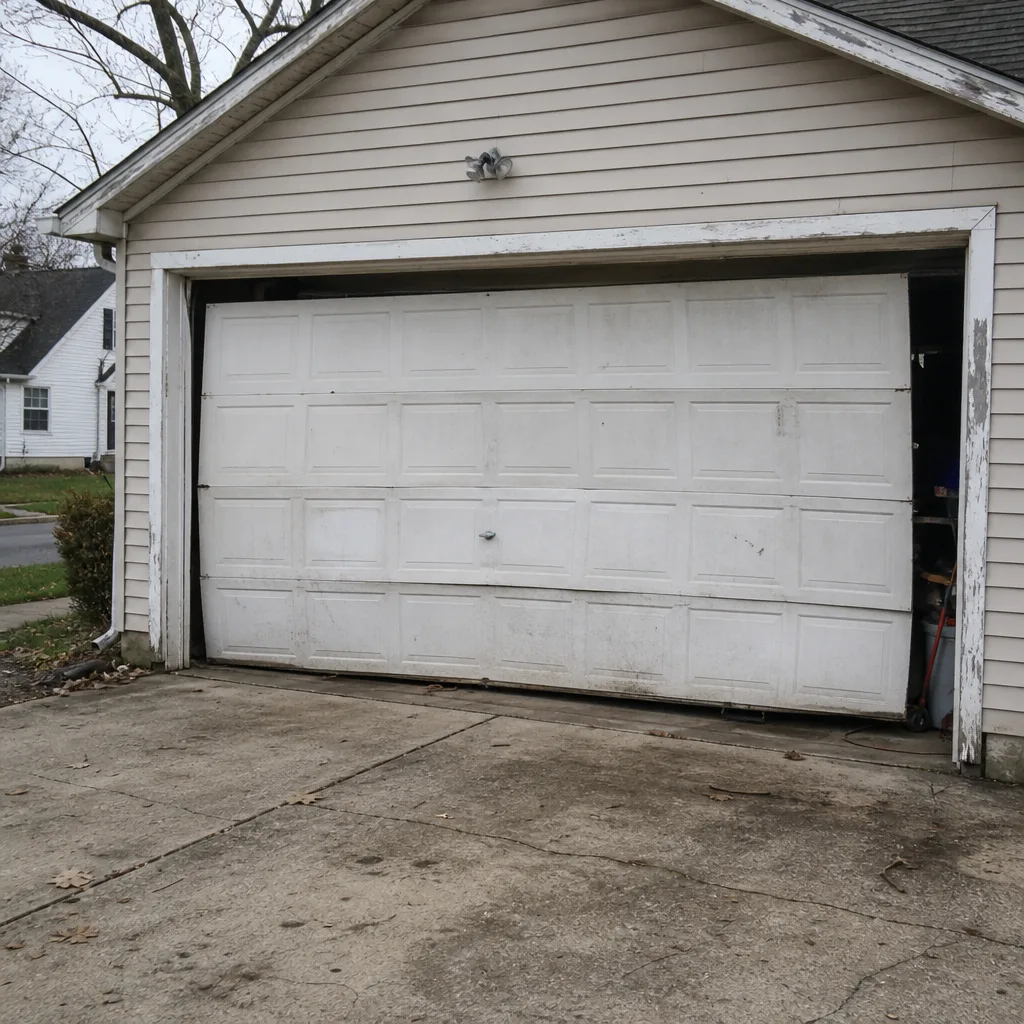 Before
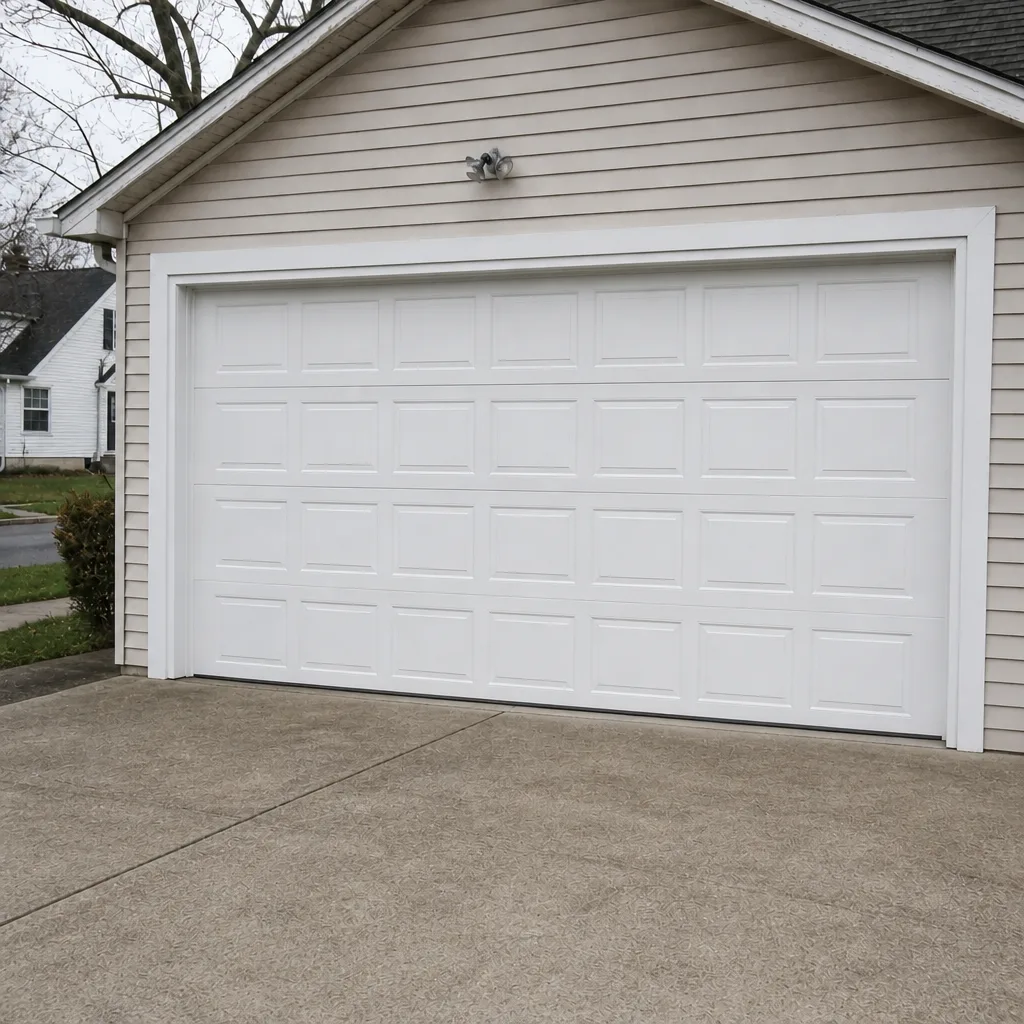 After
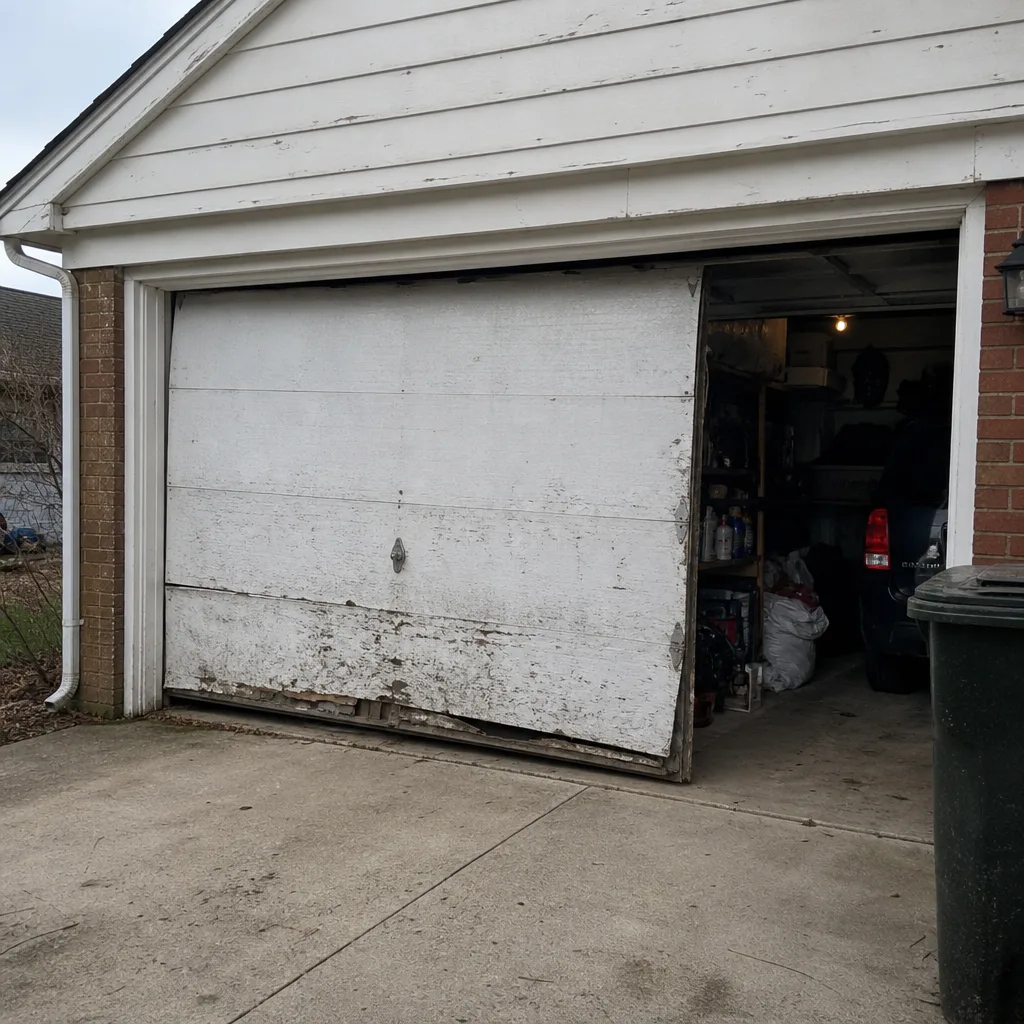 Before
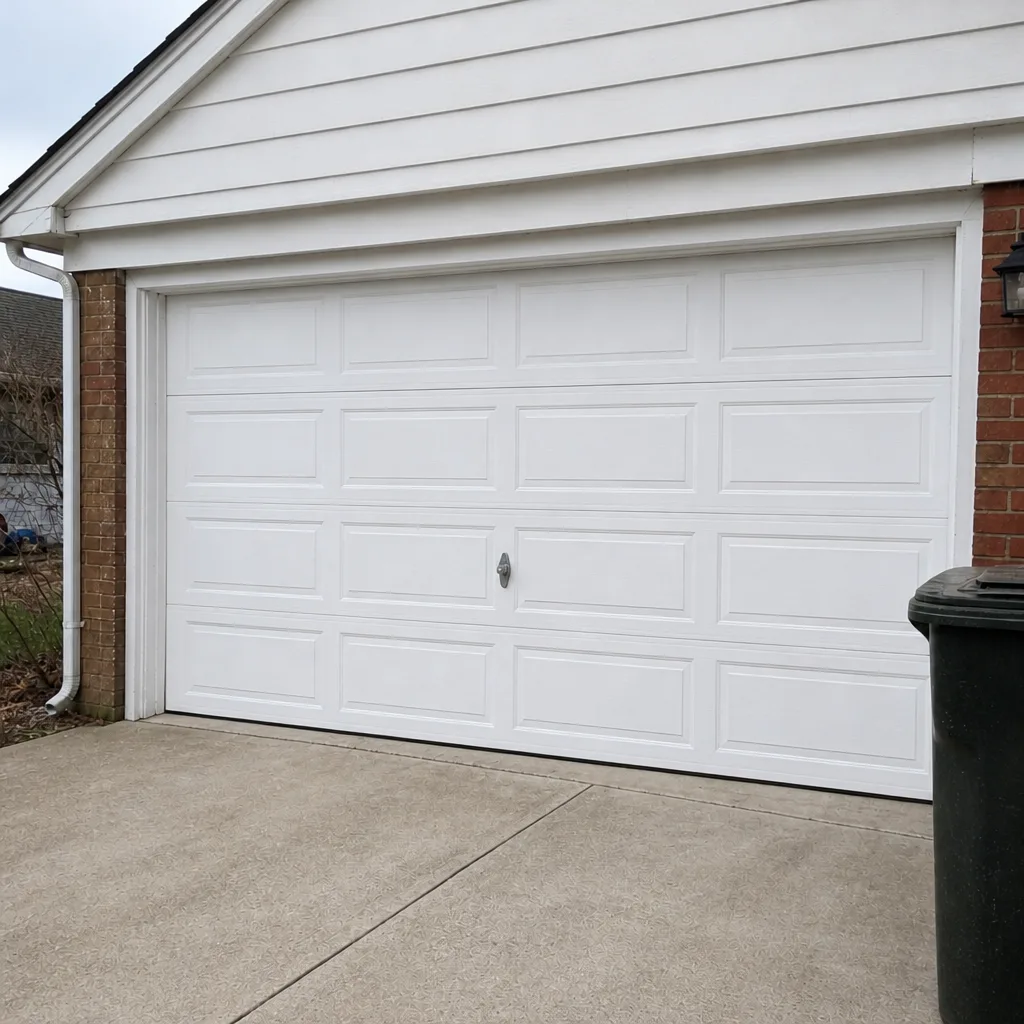 After
When to Call a Professional
Some garage door problems are obvious. A snapped spring, a door hanging crooked, a car that can’t get out of the garage, a bottom panel crunched by an SUV. Call. A door that’s stuck open overnight in Mentor is a security issue, not something to sleep on. Same for any door that won’t stay down, any opener that’s running but not moving the door, and any visible fraying on the cables. Cables and springs are dangerous work. Don’t attempt them yourself.
Other problems are subtle but worth a pro. A door that rattles a bit more than it used to, a remote that suddenly needs to be pressed twice, a squeak on the way up, a bottom seal that lets daylight show through. Those are usually small fixes that get bigger if ignored through a full Mentor winter. Mentor Garage Door Repair Pros offers free estimates in Mentor. Call (833) 923-2167. We answer 24/7. Fast dispatch from 7am to 7pm, Sunday through Friday, closed Saturday.
Frequently Asked Questions
No. Ohio does not issue a specialty license for garage door installation or repair. General contractors are licensed by the state for residential work, but there is no separate garage door certification program overseen by the state. That means anyone with a general contractor license can legally work on your door, and it’s why brand experience and spring-specific skill matter more than a license lookup alone. Call (833) 923-2167 for a free estimate and we’ll tell you exactly what work your door needs.
Approximately, typical spring repair ranges run from a low-end figure for a single spring service up to a higher figure for a matched-pair replacement, and the exact number depends on the spring style, cycle rating, and door weight. The written estimate sets the final price, and the price is agreed before any work starts. Call (833) 923-2167 for an exact quote; estimates are free.
In most cases yes. A stuck-open door is a security issue, so we prioritize it in our dispatch schedule. We answer 24/7, and fast dispatch runs from 7am to 7pm, Sunday through Friday (closed Saturday). Call (833) 923-2167 and we’ll book the next available opening.
Only if the diagnosis reveals something different than what the phone description suggested. When that happens, we stop, explain what we’ve found, and give you an updated written estimate before any work begins. The price you agree to in writing is the price you pay for the work as agreed. Call (833) 923-2167 for a free estimate on the job you’re looking at.
The local pro we connect you with is licensed and insured as their state requires, and carries the local registrations Lake County work calls for. We verify this before recommending any contractor, and we encourage you to ask for the certificate of insurance independently. Our technicians have up to 9 years of experience, and we work on 8 of the most widely installed residential brands: LiftMaster, Chamberlain, Genie, Clopay, Amarr, Wayne Dalton, Craftsman, and Raynor. Call (833) 923-2167 for a free estimate.
It’s time to consider full replacement when the door’s frame is failing, panel damage exceeds the door’s value, or the system is so old that key parts can’t be sourced. Most repairs, including springs, rollers, cables, and openers, are still less than a full replacement, and a legit contractor will investigate those first. If you’re comparing repair to replacement in Mentor, reach out to Mentor Garage Door Repair Pros for a free estimate before you commit. Call (833) 923-2167.
The Bottom Line
Hiring a garage door contractor in Mentor is a filtering problem more than a shopping problem. Ohio doesn’t hand out a specialty garage door license, so the credentials that matter are insurance, local registration, and brand-specific experience with the kind of system you actually own. Ask the questions before the tech shows up. Read the estimate line by line. Confirm the warranty on parts and labor in writing. And treat a first-visit replacement pitch without testing as the strongest signal to get a second opinion. A contractor who works on your brand, quotes honestly, and stands behind the work is the one worth your time. Full-service help across repair, opener work, spring work, and installation is one call away: (833) 923-2167. We answer 24/7. Fast dispatch from 7am to 7pm, Sunday through Friday, closed Saturday. Free estimates, and the price is agreed before any work starts.
Written by the team at Mentor Garage Door Repair Pros.