
Last updated November 22, 2026
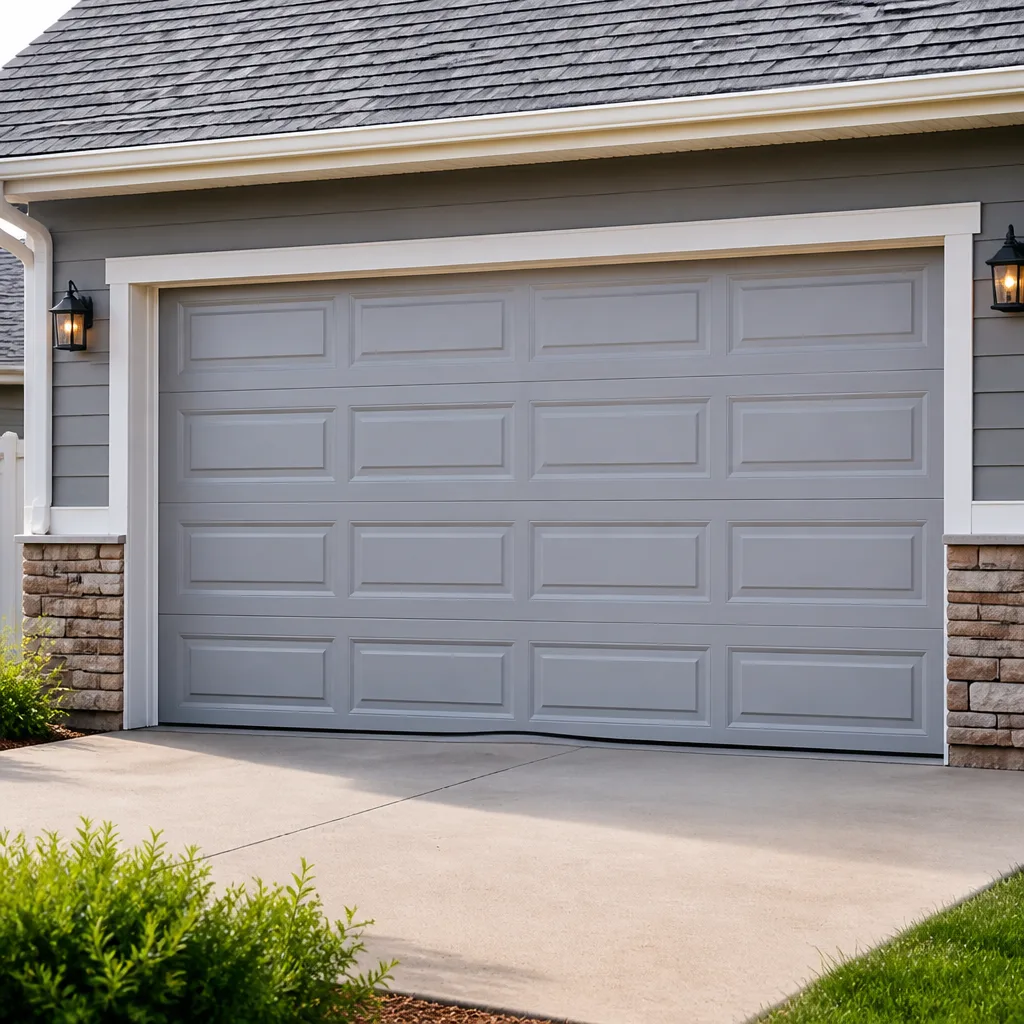 Raised-panel steel
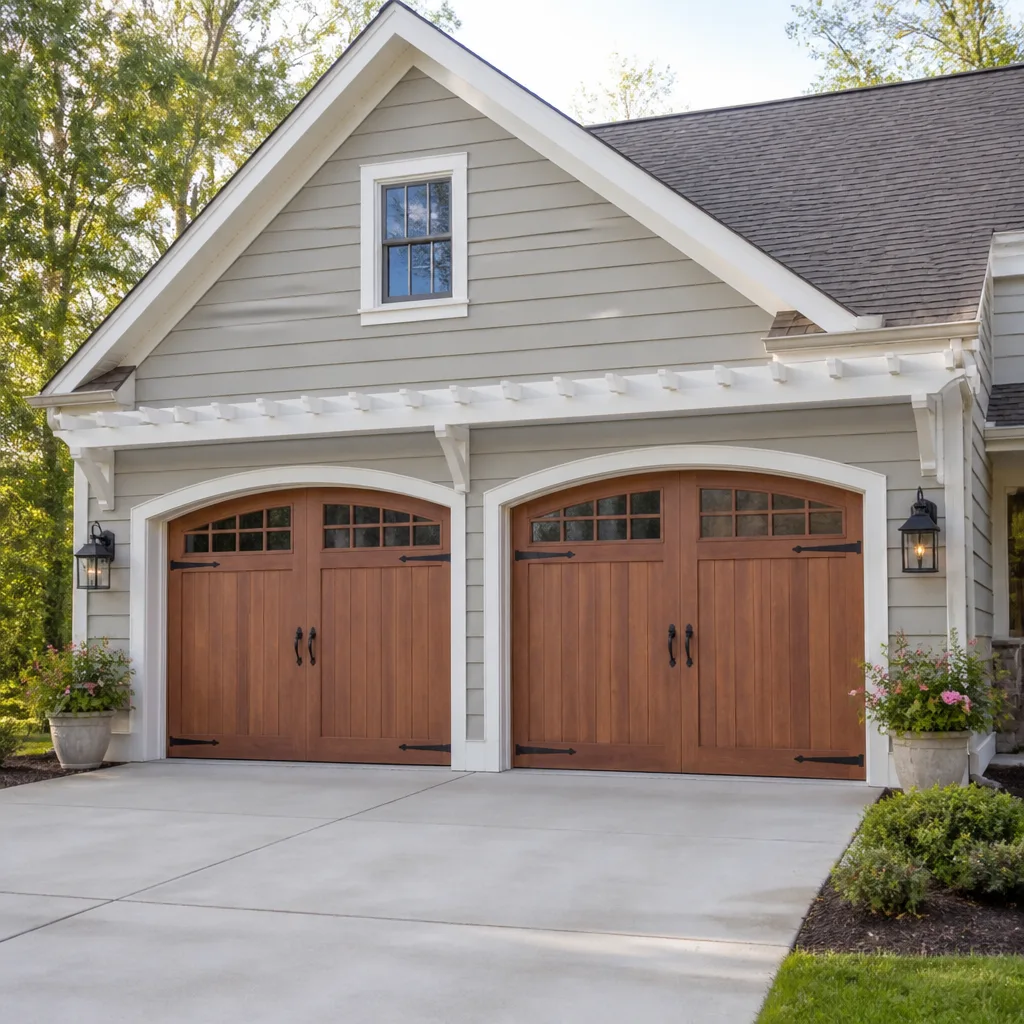 Carriage house
 Modern flush
 Full-view glass
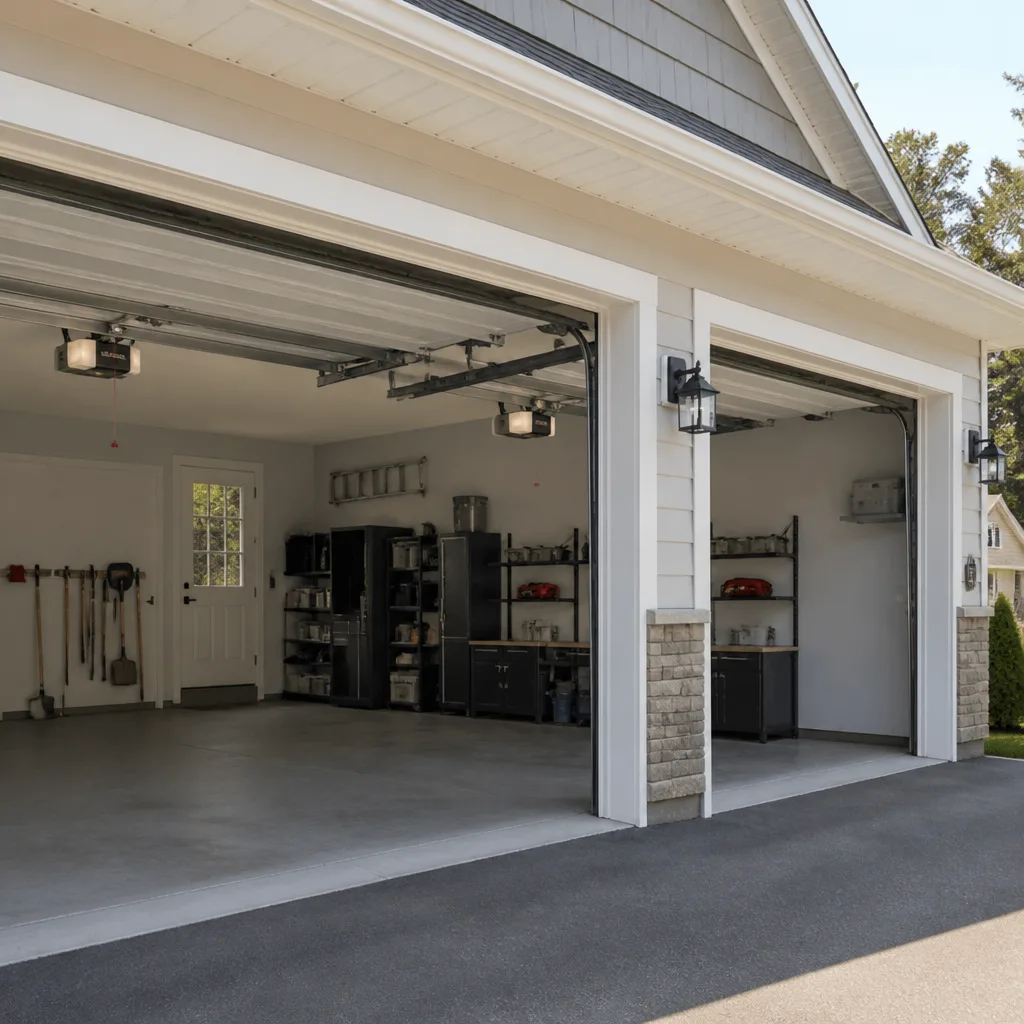 LiftMaster openers
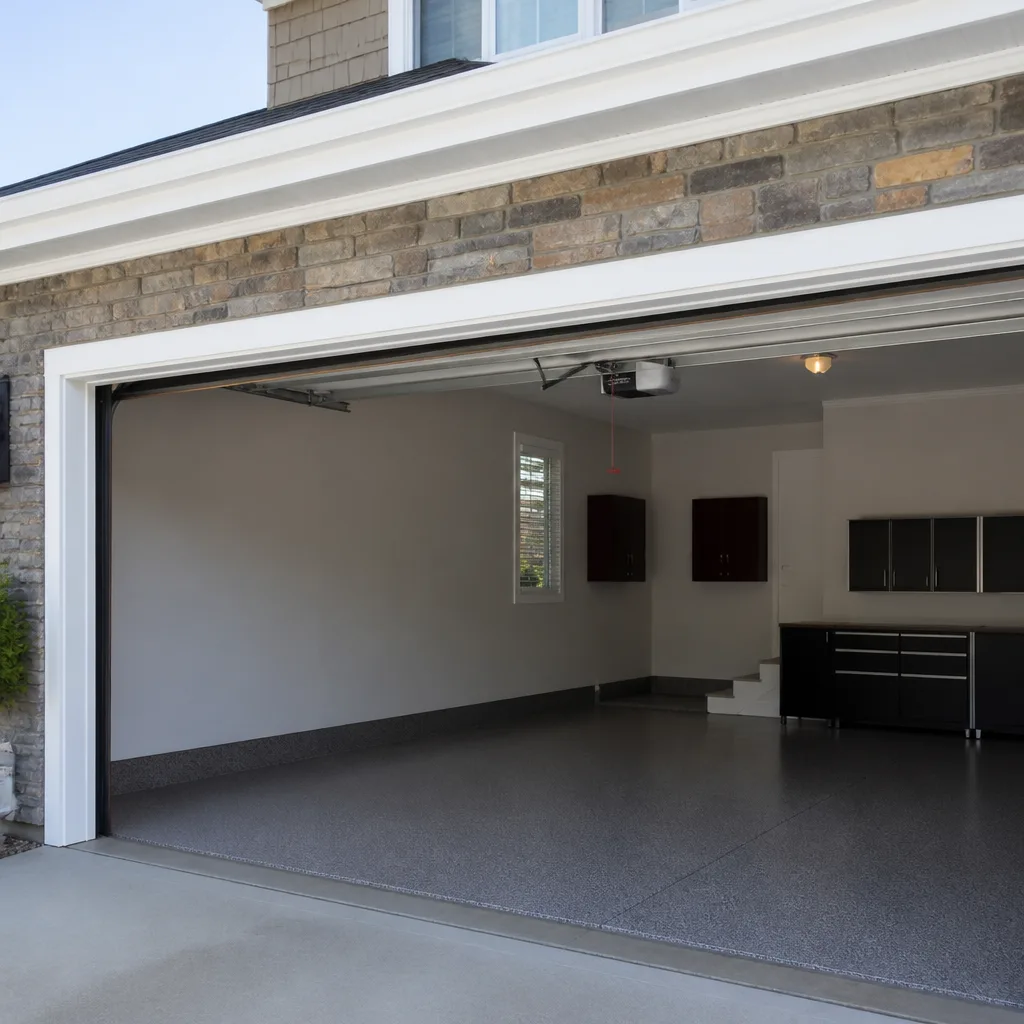 Chamberlain openers
Full 25-point door and opener safety check with every visit - springs, cables, rollers, tracks, and your LiftMaster or Chamberlain opener included
You get a price before we start. It does not change when the pro arrives.
Get your free estimateGarage Door Emergency Preparedness Guide for Mentor Homes
During a power outage, the manual release cord on your garage door opener does the opposite of what most people expect. Pulling it doesn’t open the door. It disconnects the door from the drive system so you can lift it by hand – and if you pull it while the door is under tension from a broken spring, that door can come down hard. We’ve seen this mistake made in Mentor more than any other, and it’s the kind that turns a nuisance into a real injury.
This guide covers the three emergencies Mentor homeowners actually face: storm-driven power outages, doors that trap a car inside, and spring failures that make a door unsafe to touch. You’ll learn what to do first, what to never do, and which situations can safely wait until morning.
Quick Answer
Pull the manual release only when the door is fully closed and you’ve confirmed the springs are intact. If a spring is broken, or the door is stuck open, stop operating it and call a professional. In Mentor, a garage door emergency is anything that traps a vehicle, leaves the home unsecured, or involves a broken spring or snapped cable – those need same-day repair. A door that’s merely noisy, slow, or sticking can usually wait for a scheduled appointment.
Styles & brands we work with
- Raised-panel steel
- Carriage house
- Modern flush
- Full-view glass
- LiftMaster openers
- Chamberlain openers
Table of Contents
- How to Operate the Manual Release on Common Openers
- What to Do Immediately After a Spring Breaks
- How to Secure a Door That’s Stuck Open
- Emergency Power Options During Lake Erie Outages
- Same-Day Emergency vs. What Can Wait Until Morning
- When Your Car Is Trapped Inside
- Winter-Specific Failure Points in Mentor
- Common Mistakes to Avoid
How to Operate the Manual Release on Common Openers
The manual release is the single most misunderstood part of a residential garage door system. It’s a cord, usually red, hanging from the trolley that rides along the opener’s rail. Pulling it disengages the trolley from the drive belt or chain so the door becomes free-moving. That’s the whole function. It doesn’t lift the door, and it doesn’t lock anything.
Here’s the safe sequence for the opener brands we work on most in Mentor – LiftMaster, Chamberlain, Craftsman, and Genie all use essentially the same trolley design:
- Close the door completely first. Let the opener run the door down and stop. If the opener is dead from a power outage, use the wall control or the app if you have battery backup – otherwise wait for power or treat the door as locked.
- Look at the springs before you pull anything. Stand inside the garage and check the torsion spring above the door or the extension springs along the sides. A gap in the coil means a broken spring. If you see a gap, stop here.
- Pull the cord straight down and let it hang. The trolley should click free. Don’t yank it sideways – that can bend the release arm.
- Lift the door by hand slowly. A properly balanced door takes about the same effort as lifting a bag of groceries. If it feels heavy or won’t stay up on its own, lower it and call us.
- Re-engage before using the opener again. Pull the cord toward the door to reconnect the trolley, then run the opener once to confirm the door cycles normally.
The dangerous scenario is a cord pulled with the door in the down position while a spring is broken. The door feels light at first because the spring isn’t counterbalancing it, but as soon as you lift past a certain point, all that weight comes back. Someone standing under it can be seriously hurt. This is exactly the kind of situation where our garage door spring repair team needs to be the one handling the door, not you.
What to Do Immediately After a Spring Breaks
A broken spring announces itself with a loud bang that sounds like a firecracker going off in the garage. It usually happens when the door is closed or just starting to open, and it happens more in Mentor’s cold months when the steel is at its most brittle. If you hear that sound, here’s what to do – and not do – in the first few minutes.
- Don’t touch the opener. If you press the button and the spring is broken, the opener will try to lift the full weight of the door. It’ll strain the motor, possibly snap the lift cables, and the door may come down unevenly.
- Confirm the spring is broken. Look at the torsion spring above the door’s center or the extension springs running parallel to the tracks. A visible gap in the coil is the tell. Don’t reach up and touch it.
- Treat the door as locked. A door with a broken spring may fall if you try to lift it by hand. Don’t attempt to open it.
- Free a trapped car from the inside route. If your car is inside and you need to leave, exit through the house. Once you’ve driven away, close the door behind you – but only if it’s already closed. If the door is stuck open, see the next section.
- Call for same-day service. A broken spring means the door is unsafe to operate and the opener is vulnerable. Call (833) 923-2167.
Springs are the most dangerous component in any garage door system. They store enough energy to break a bone, and a snapped extension spring can whip across the garage. We never recommend homeowners replace them. Our technicians have up to 9 years of experience with this exact job, and we’ve seen what happens when a homeowner tries a hardware-store spring kit on a Mentor door that needed a matched pair.
How to Secure a Door That’s Stuck Open
A door stuck open is a security problem first and a mechanical problem second. In Mentor, this comes up after ice storms and wind events – the door gets partway up, the opener fails or the track is obstructed, and now your home is open to the street. Before you think about fixing anything, secure the opening.
- Lock the door in its track. Use a pair of locking pliers clamped on the track just above a roller, or a C-clamp at the roller hinge. This stops the door from sliding down unexpectedly. It’s a temporary hold, not a fix.
- Block the bottom from the inside. A couple of heavy objects against the bottom panel won’t stop a determined intruder, but they will stop the wind from lifting the door further and stop casual access.
- Close off the garage from the house. Lock the interior door. If your garage connects to the kitchen or hallway, keeping that door locked matters more than what’s happening at the garage end.
- Don’t try to force the door down by hand. If the track is bent or a cable is off, pushing the door down can bend panels or cause a cable to snap back.
- Call for same-day help. A stuck door is one of the situations our garage door repair service handles fast, because leaving a home open isn’t something anyone should sit on.
If you’re leaving the house with the door stuck open, secure it with locking pliers and heavy blocking first, lock the interior door, and call us from wherever you’re headed. We answer 24/7. Fast dispatch from 7am to 7pm.
Emergency Power Options During Lake Erie Outages
Mentor sits close enough to Lake Erie that winter storms and ice events knock out power with some regularity. When the power drops, your garage door becomes a manual door – unless your opener has battery backup. This is the one upgrade that makes the biggest difference to garage door emergencies in Mentor, and it’s not something most homeowners think about until the power’s already out.
Here’s the honest breakdown of what works and what doesn’t:
- Openers with built-in battery backup – LiftMaster and Chamberlain make models with an integrated backup that keeps the door operating for a set number of cycles after the power fails. This is the option that actually gets you in and out of the garage during a multi-hour ice storm outage. Worth asking about when you replace an opener.
- Openers without battery backup – Craftsman and Genie units, and older LiftMaster and Raynor models, rely entirely on household power. When the power goes, the door doesn’t move unless you use the manual release.
- Exterior keyed disconnect – a small lock on the outside of the door that lets you release the trolley from outside the garage. Useful when the power’s out and your car is inside. It doesn’t power anything; it just lets you get the door moving manually.
- Whole-home generator – if you already have one, the garage circuit is usually included. If it isn’t, ask your electrician to put the opener on a backed-up circuit.
- Extension cords and jump packs – never. The opener isn’t designed for it, and this is how people damage the control board.
If you’re replacing an opener because of repeated outage failures, our garage door opener repair team can walk you through which units have backup and which don’t. We install and service LiftMaster, Chamberlain, Genie, and Craftsman openers, so the answer usually doesn’t require a second call to a different brand’s installer.
Same-Day Emergency vs. What Can Wait Until Morning
Not every garage door problem is an emergency. Triage it honestly before you call, because a door that can wait overnight should wait – and knowing the difference keeps you from a midnight scramble or a rushed decision. Here’s how we sort it when a Mentor homeowner calls us.
Same-day emergency
- Door won’t open and a car is trapped inside and needed for work or medical reasons
- Door is stuck open and the home is exposed to the street
- Broken spring – the door is unsafe and the opener is at risk
- Snapped or off-track cable – the door can drop without warning
- Door is off its tracks and leaning into the opening
- Opener motor runs but door doesn’t move, with the door in a position that blocks access
Can wait until the next scheduled slot
- Door is noisy, squeaks, or shudders but still operates normally
- Remote or keypad stopped working but the wall control works fine
- Photo-eye sensor is misaligned and the door reverses when it shouldn’t – check for an obstruction you can clear yourself first
- Door is slow to respond but opens and closes fully
- Weather seal is worn, cracked, or letting cold air in
If it can wait, we’d rather tell you that and book you than have you pay for urgency you didn’t need. Fast diagnosis, honest recommendation is how we operate. When the door won’t move and it truly matters, we move fast.
When Your Car Is Trapped Inside
A trapped car is the most stressful version of a garage door emergency, and it usually comes with a clock – a shift, a school pickup, a medical appointment. Here’s the safe play, step by step, before you call us.
- Don’t force the opener. If the motor hums and the door doesn’t move, stop pressing. Repeated attempts can burn out the motor or strip the drive gear.
- Identify what’s wrong. If the door is completely dead, check the wall outlet and the opener’s circuit breaker in your panel. If the light on the opener comes on but nothing moves, it’s likely a trolley or gear issue. If there’s a broken spring visible, stop here – this is a spring problem.
- Use the manual release, correctly. Follow the manual-release steps above. Door closed, springs intact, pull the cord, lift slowly.
- If the spring is broken, leave the door closed. Don’t lift it by hand. Walk out through the house, take your other vehicle or a rideshare, and call us for same-day spring repair.
- If the door is opened manually, secure the garage before you drive away. Close the door by hand, then re-engage the trolley or block the door closed if the opener isn’t working.
We know a trapped car isn’t a theoretical inconvenience. If you’re in this position in Mentor, call (833) 923-2167. We answer 24/7, and a same-day slot is often available for a genuinely stuck-door situation.
Winter-Specific Failure Points in Mentor
Mentor winters put specific stress on a garage door system that milder climates don’t. Cold steel is more brittle, ice builds in the tracks, and the garage is often the coldest room in the house. Here’s what to watch for before a failure happens.
- Springs in cold weather – torsion springs are under constant tension and become more likely to snap as temperatures drop. There’s nothing you can do to prevent it entirely, but keeping the door balanced and serviced reduces the risk. A spring that’s been noisy or sluggish all fall is one to have checked.
- Frozen bottom seal – the rubber seal at the bottom of the door can freeze to the floor. Never force the opener if the door won’t lift. Break the seal loose by hand carefully, or pour warm (not hot) water along the seal line.
- Ice in the tracks – the vertical tracks can fill with ice after freezing rain, jamming the rollers. Clear ice with a plastic scraper, not a metal tool that can gouge the track.
- Cold-stiffened grease – older grease thickens in the cold and the door drags. This is a maintenance item, not an emergency, and it’s worth scheduling before the first hard freeze.
- Photo-eye fogging or frosting – one of the most common “the door won’t close” calls every winter. Wipe the lenses clean before assuming an opener failure.
If you want a winter readiness check, that’s a scheduled visit, not an emergency. Call (833) 923-2167 and we’ll book it. Free estimates, and the price is quoted and agreed before any work starts.
Common Mistakes to Avoid
- Pulling the manual release while the door is up. A door with a broken spring or a snapped cable can drop when the release is pulled in the up position. Always confirm the door is fully closed and the springs are intact first.
- Pressing the opener after a spring snaps. The opener wasn’t built to lift the full weight of the door. Running it without a counterbalancing spring strains the motor and can snap a lift cable, which turns a spring repair into a full door repair.
- Assuming a stuck door is an opener problem. In our experience, most “the opener is broken” calls are actually a spring, cable, or track issue. Diagnose the door before blaming the motor.
- Using a hardware-store spring kit on a matched pair. Garage doors typically use matched torsion springs sized to the door’s weight. Replacing one spring of a pair leaves the door out of balance and shortens the life of the new spring. Springs are also the most dangerous part of the system – this is not a homeowner job.
- Leaving a door stuck open overnight in a Mentor neighborhood. A door that’s open to the street is a security opening. Clamp the track and block the bottom before bed, and call for same-day help.
- Buying a replacement opener without checking the door. If the door is heavy, off-balance, or has a failing spring, a new opener will fail faster than the old one did. Fix the door, then consider the opener.
- Assuming all openers have battery backup. Many Craftsman, Genie, and older Raynor and LiftMaster units don’t. During a Lake Erie ice storm outage, those doors have to be opened manually, and the manual release has to be pulled correctly.
See the difference
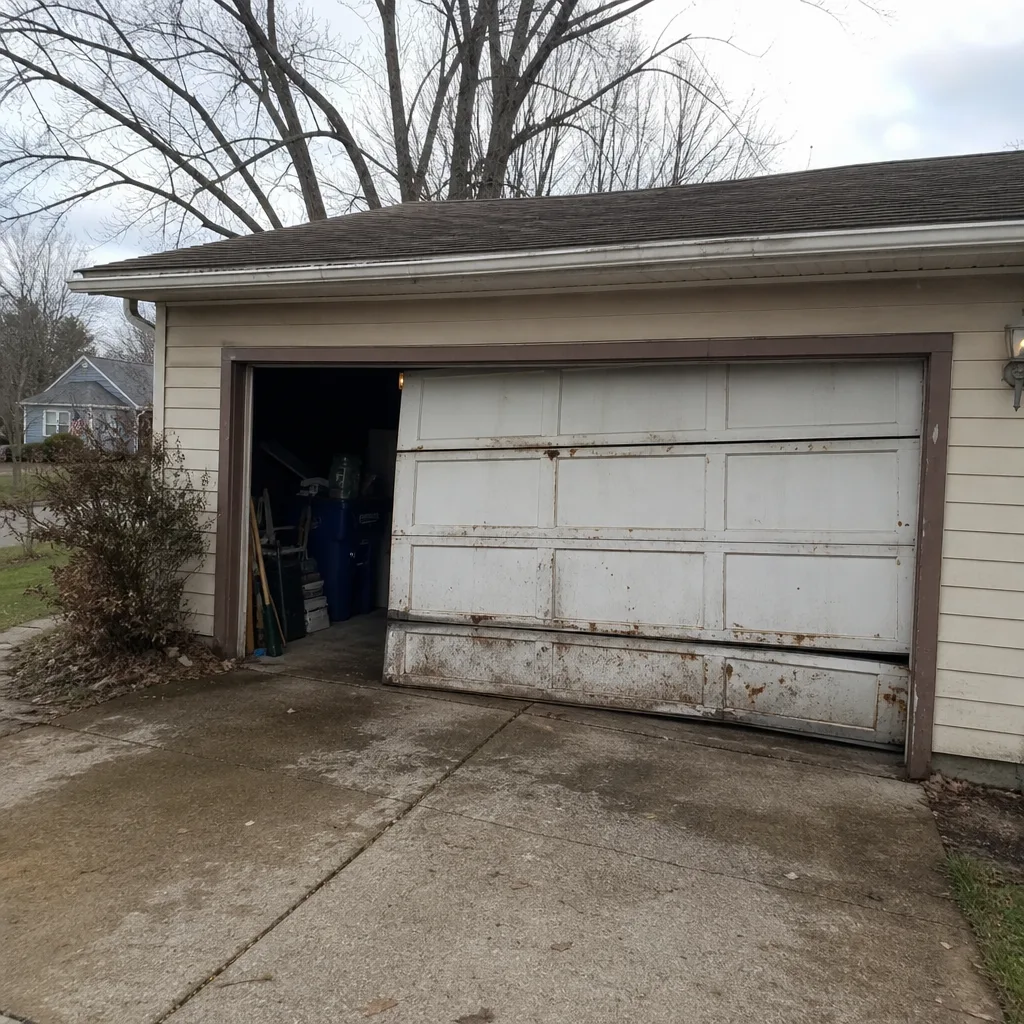 Before
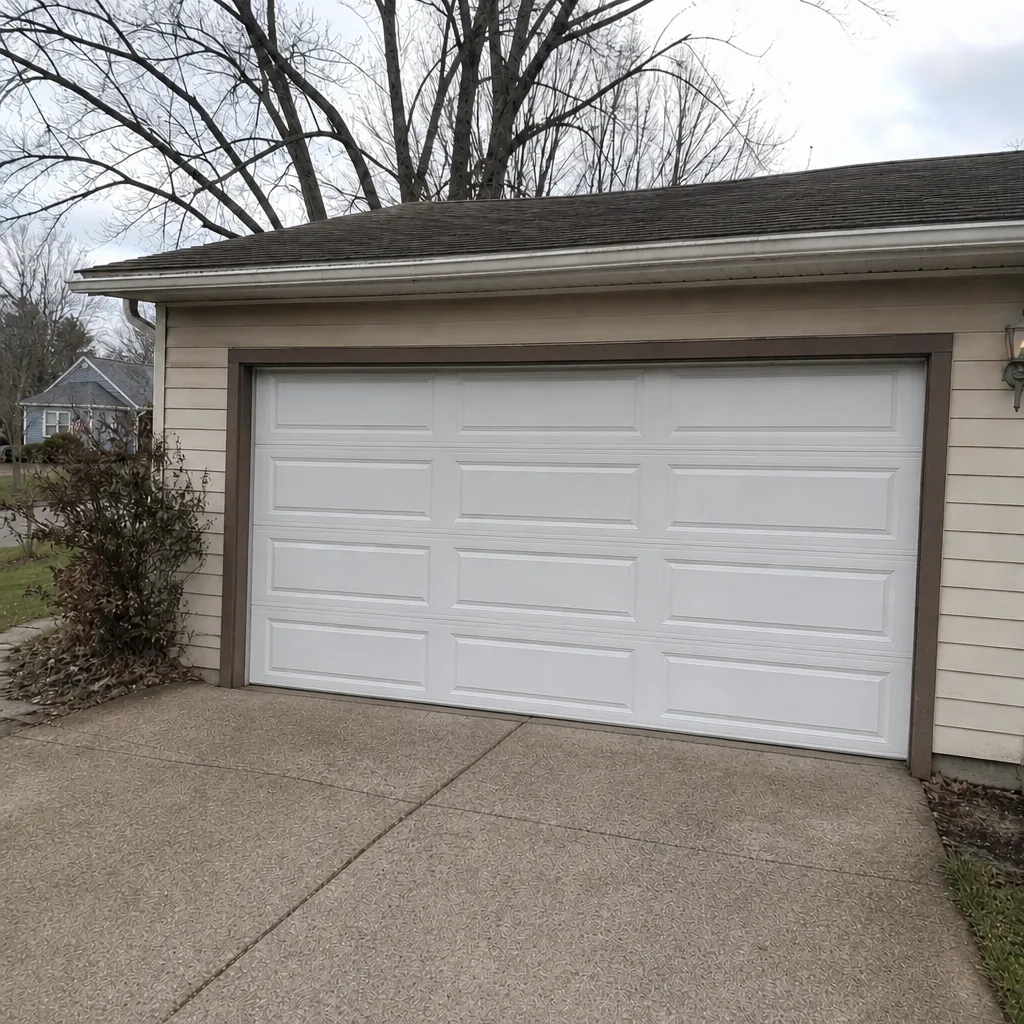 After
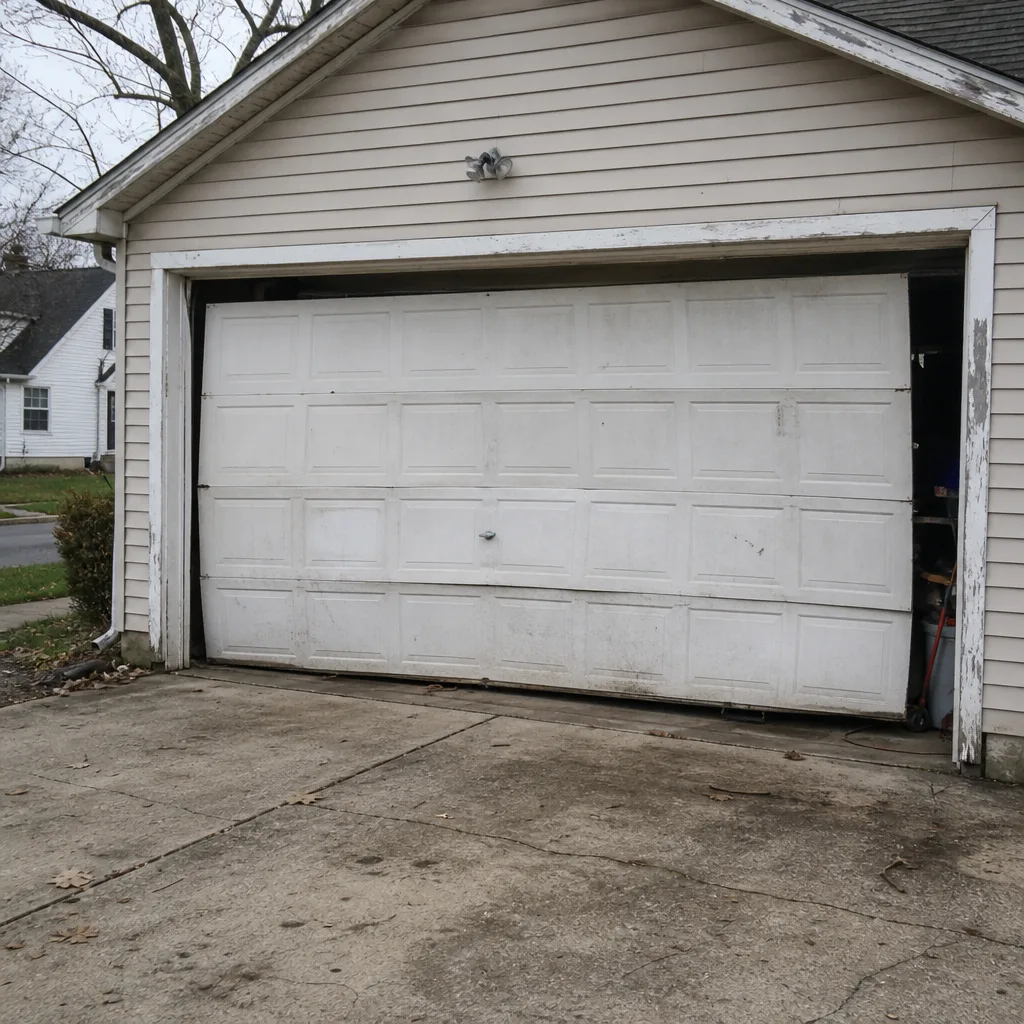 Before
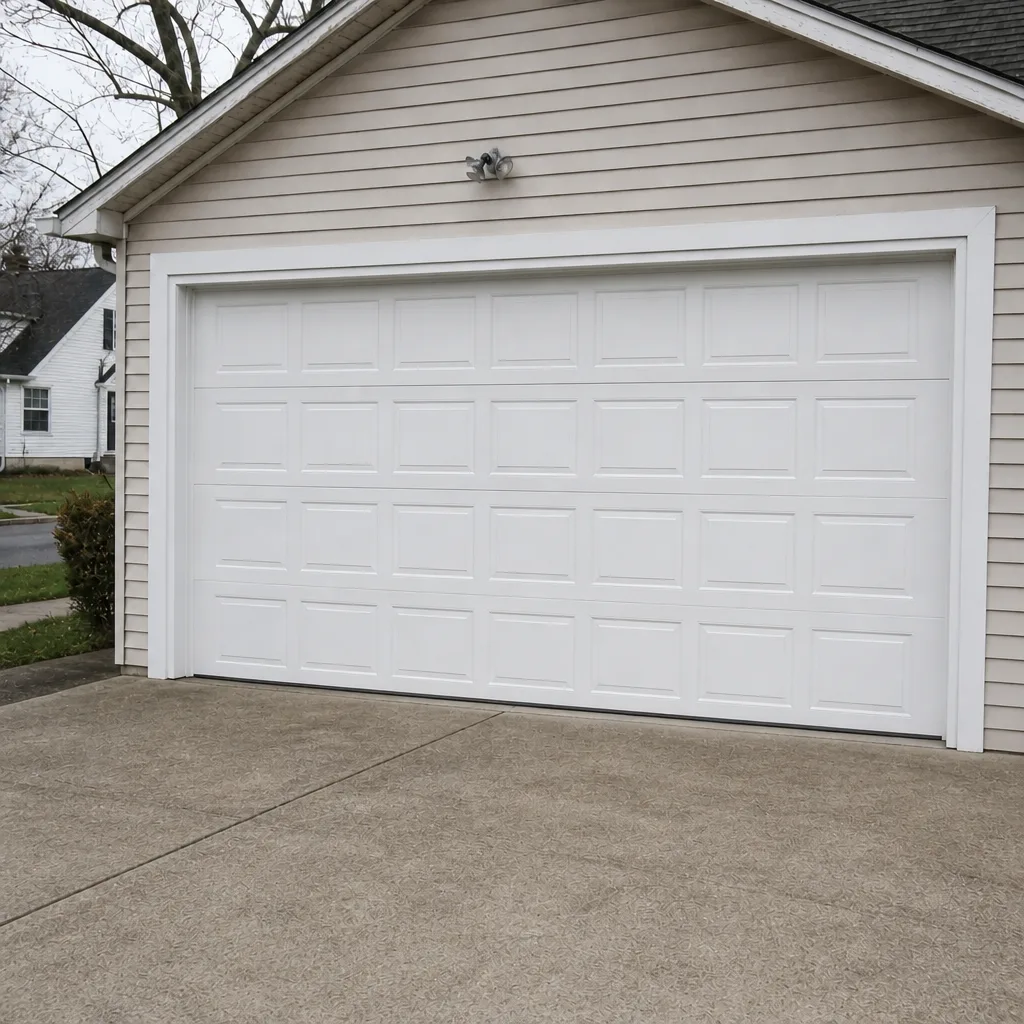 After
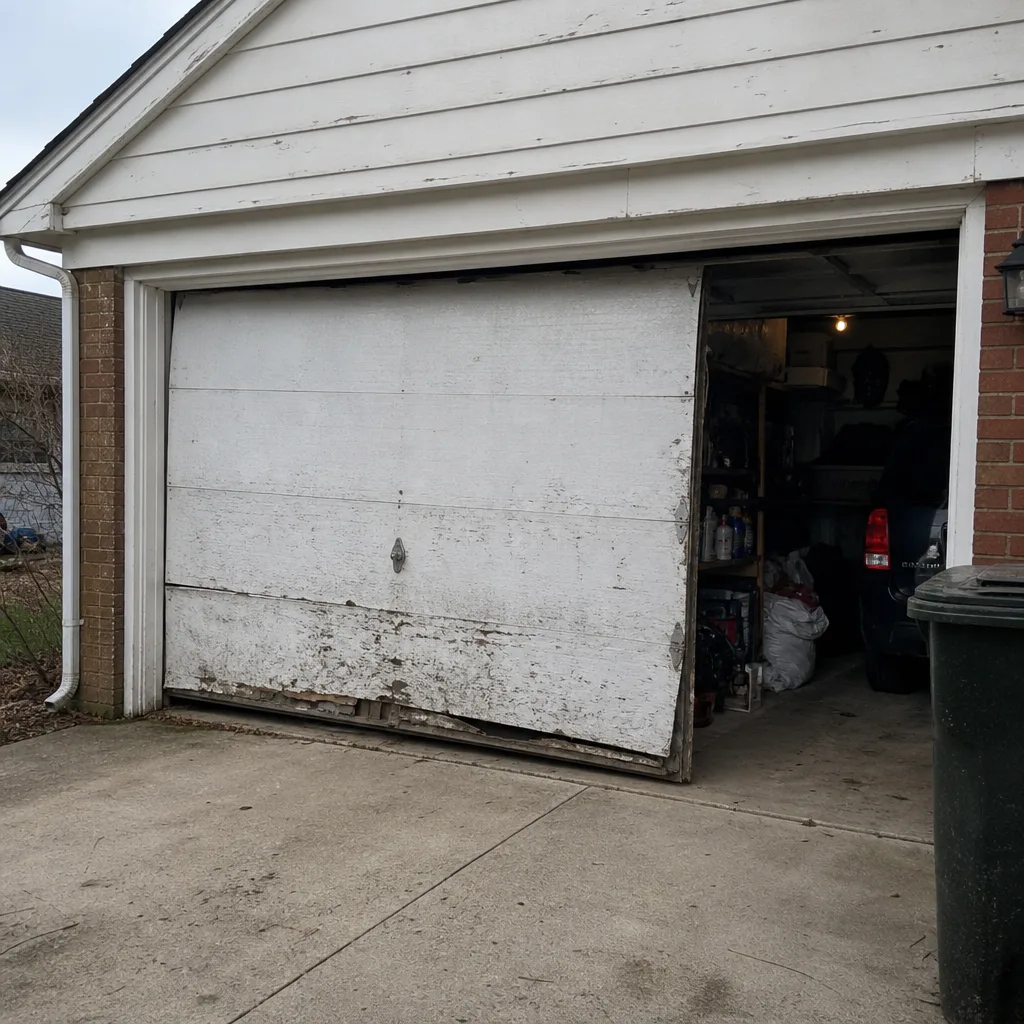 Before
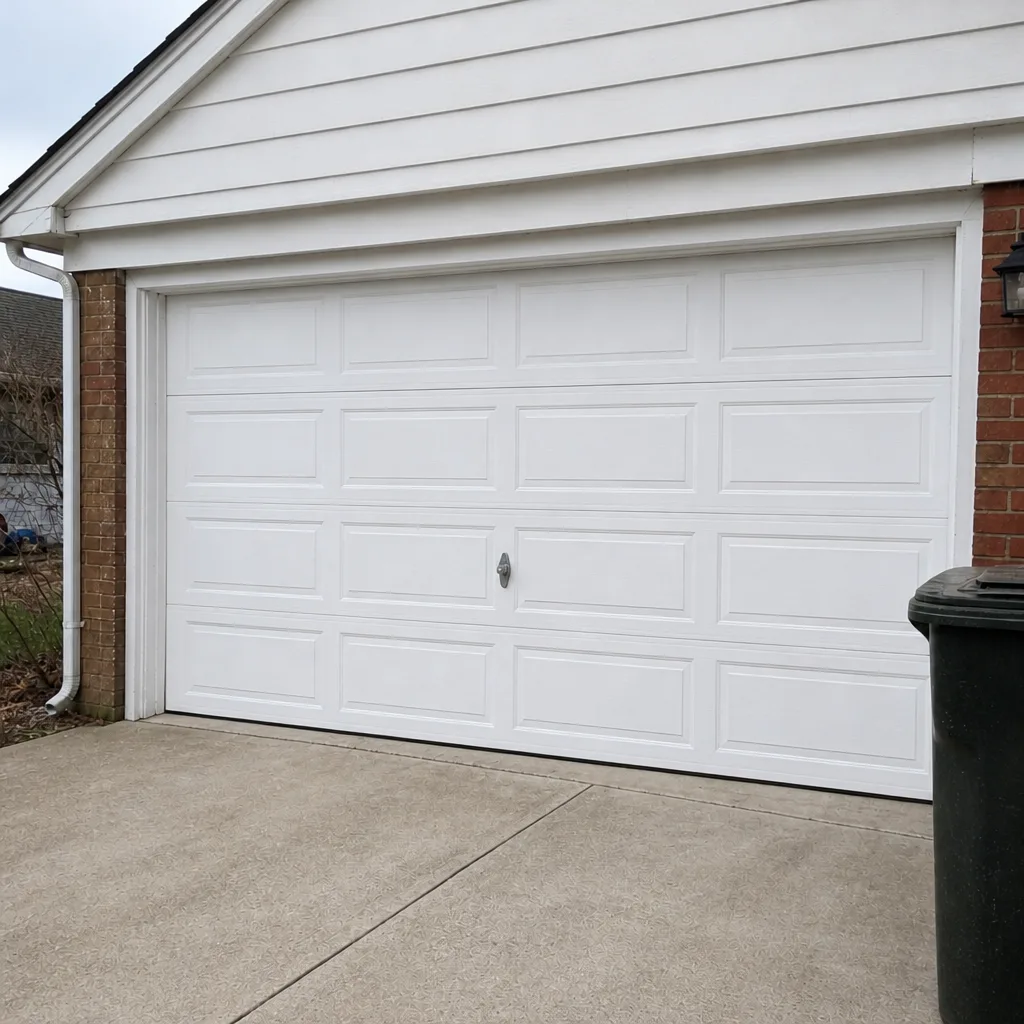 After
When to Call a Professional
Call us when the door won’t move and you can’t safely diagnose why, when a spring or cable has failed, when the door is stuck open and the house isn’t secure, or when your car is trapped and you need out. Those are the calls we prioritize. We also want the calls that aren’t emergencies – a door that’s noisy, slow, off-balance, or due for a tune-up. Fast diagnosis, honest recommendation: if a part can be repaired rather than replaced, we’ll tell you. If the door is beyond saving, we handle full installation too. Mentor Garage Door Repair Pros offers free estimates in Mentor – call (833) 923-2167. We answer 24/7. Fast dispatch from 7am to 7pm, Sunday through Friday, closed Saturday. The price is quoted and agreed before any work starts.
Frequently Asked Questions
Check the power source and the photo-eye sensors before anything else. If the opener light comes on but nothing moves, the problem is usually mechanical – a spring, cable, or trolley – not the motor. If the door is dead and you need out, use the manual release only after confirming the door is fully closed and the springs are intact. Call (833) 923-2167 if you’re not sure.
Yes, spring repair is typically a same-day service when you call during dispatch hours. We stock matched torsion and extension springs for common door sizes, and our technicians have up to 9 years of experience with this exact job. Call (833) 923-2167 for an exact quote – estimates are free.
No. A door with a broken spring has lost its counterbalance, and the full weight of the door can drop without warning. Don’t lift it by hand and don’t run the opener. Leave the door closed and call for same-day repair. Our garage door spring repair team handles this safely.
Look for a battery compartment on the opener unit itself, or check the model number on the manual. LiftMaster and Chamberlain make models with built-in backup; many Genie, Craftsman, and older Raynor and LiftMaster units don’t have it. If you’re replacing an opener in Mentor because of outage failures, ask us which models have backup. Call (833) 923-2167 for options and pricing.
No, not if you can avoid it. A door open to the street leaves the home exposed. Clamp locking pliers on the track above a roller to stop the door sliding, block the bottom from the inside, and lock the interior door. Then call for same-day service.
No. The price is set per job by the written estimate, and the estimate is free. You’ll know the number before any work starts, whether it’s a same-day repair or a scheduled visit. Call (833) 923-2167 for an exact quote.
The Bottom Line
Garage door emergencies in Mentor come down to three things: power outages from Lake Erie storms, doors that trap a car inside, and spring failures that make the door unsafe to touch. Each one calls for a different response, and knowing which is which before it happens is what turns a stressful night into a manageable one. Confirm the door is fully closed and the springs are intact before you pull the manual release. Stop operating a door after a spring snaps. Secure a stuck-open door with clamps and blocking before you leave the house. And call us when it’s a real emergency – a broken spring, a snapped cable, a door off its tracks, or a trapped car. For repair, replacement, or a full new door, Mentor Garage Door Repair Pros handles the whole lifecycle of the system. We work on LiftMaster, Chamberlain, Genie, Clopay, Amarr, Wayne Dalton, Craftsman, and Raynor – so when the door won’t move, we move fast. Call (833) 923-2167. We answer 24/7. Fast dispatch from 7am to 7pm, Sunday through Friday, closed Saturday. Free estimates, written quote before work begins.
Written by the team at Mentor Garage Door Repair Pros.